What Happens to Your Gutters When They Get Hit With Hail?
You’ve lived through enough Colorado springs to know what’s coming. The sky turns green, the temperature drops fifteen degrees in five minutes, and you’ve got maybe ten minutes to get the cars in the garage. Then comes the sound — that distinctive hammering on the roof that makes you wince every time.
When the storm passes, you check the cars, you check the windows, you might even check the siding. But your gutters? Most homeowners forget about them until the next heavy rain, when water starts pouring over the sides or dripping through seams that weren’t leaking before. By then, the damage is done, and what started as a few dents has turned into a drainage failure that’s directing thousands of gallons toward your foundation.
Why Colorado’s Hail Season Hits Gutters Harder
Colorado ranks in the top five states for hail damage insurance claims every year, and there’s a reason your homeowner’s premium reflects that. The Front Range sits at the perfect altitude where warm, moist air from the plains collides with cold air dropping from the mountains. That collision creates supercell thunderstorms with updrafts strong enough to cycle hailstones through multiple freeze-thaw rounds before they finally fall.
The National Weather Service classifies hail by size, and every category carries a different risk profile for your home. Pea-sized hail (quarter-inch) rarely causes structural damage. mothball to nickel-sized (seven-eighths of an inch) can dent standard aluminum gutters. Quarter-sized (one inch) will dent gutters and damage shingles. Golf ball-sized (one and three-quarters inches) punches holes through thin aluminum and cracks vinyl. Baseball-sized (two and three-quarters inches) destroys standard gutter systems completely and typically triggers a full roof inspection.
The problem is not just the size — it’s the volume. A typical Colorado hailstorm doesn’t drop a few scattered stones. It drops thousands of them across a fifteen-minute window, hitting the same gutter sections repeatedly. Standard builder-grade gutters use .025 to .027 gauge aluminum. That’s thin enough to dent under repeated impacts from anything three-quarters of an inch or more, which describes most hailstorms that make you stop what you’re doing and pay attention.
The Difference Between Cosmetic Damage and Drainage Failure
Here’s what matters: not every dent is a problem, but the wrong dents in the wrong places will cost you thousands in foundation repairs if you ignore them.
Cosmetic dents — the kind you see on the front face of the gutter, visible from the street — rarely affect function. They look bad, and they might lower your home’s curb appeal if you’re preparing to sell, but water still flows. The insurance adjuster will document them, but they’re not an emergency.
Structural dents are different. These happen along the bottom trough of the gutter or at the seams where sections connect. A dent in the trough creates a low point where water pools instead of flowing toward the downspouts. That standing water sits there between storms, breeding mosquitoes in summer and freezing solid in winter. When it freezes, the ice expands, cracking the seams and separating the gutter from the fascia board. By spring, you’ve got a gutter that sags, leaks at every joint, and dumps water directly against your foundation instead of directing it away from your home.
Seam damage is the second failure mode. Standard gutters are assembled from ten-foot sections joined with slip connectors and sealed with caulk. A direct hail impact on a seam can separate that connection or crack the sealant. You won’t notice it until the next heavy rain, when water starts dripping through the joint. Once a seam starts leaking, it doesn’t stop — it gets worse with every freeze-thaw cycle and every subsequent storm.
When to Inspect and What You’re Looking For
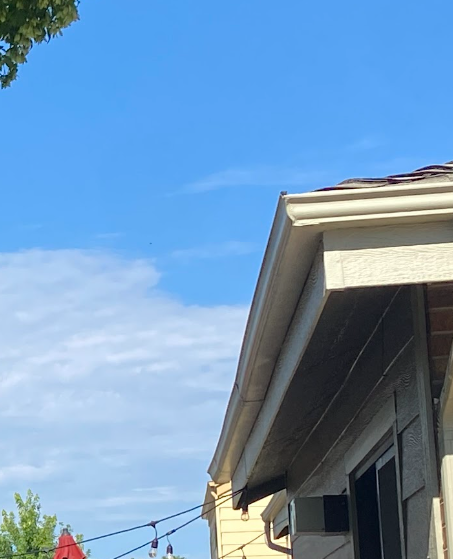
You should inspect your gutters within forty-eight hours of any hailstorm that drops stones three-quarters of an inch or larger. Wait longer than that, and the next rain might compound the damage before you’ve documented it for insurance purposes.
Walk your property’s perimeter. Use binoculars if you’re not comfortable on a ladder. You don’t need to touch the gutters to find damage. Look for visible denting along the bottom, especially near downspouts. Check the seams where sections connect. Look for gaps, separation, or fresh caulk lines that weren’t there before the storm. Watch for gutters pulling away from the fascia board. This indicates either direct impact damage to the mounting brackets or water weight pulling on the gutters.
If you have standard five-inch K-style gutters and the storm dropped quarter-sized hail or larger, assume you have damage even if you can’t see it from the ground. The top edge of the gutter takes the most direct impacts, and those hits can bend the mounting brackets or crack the back seam where the gutter attaches to the fascia.
Document everything with photographs. Your insurance company will send an adjuster, but having your own photo record from within forty-eight hours of the storm strengthens your claim if there’s any dispute about what damage is new versus pre-existing.
What Insurance Covers and What It Doesn’t
Standard Colorado homeowner’s policies cover hail damage to gutters under your dwelling coverage, not as a separate rider. That means repairs are subject to your deductible, which for most policies averages between one thousand and two thousand dollars. If your gutter damage estimate comes in under your deductible, you’re paying out of pocket. If it exceeds the deductible, insurance covers the difference, but you’ll need documentation proving the damage occurred during a specific storm event.
Here’s the complication: insurance covers functional replacement, not upgrades. If you had builder-grade .027 gauge aluminum gutters before the storm, the adjuster will approve replacement with the same gauge material. They call that “Like-for-Like”. If you want to upgrade to heavier gauge aluminum or a different system entirely, you pay the difference between what insurance covers and what the upgrade costs.
Most adjusters understand that repeated hail damage claims are expensive for everyone involved. They may approve a higher-grade material if you can demonstrate that standard gutters will likely fail again in the next major storm. That conversation is easier to have when you include a contractor who installs systems specifically engineered for hail-prone regions. A company who can provide documentation about material gauge, impact testing, and warranty coverage that extends beyond the standard one-year workmanship guarantee.
Why Material Thickness Matters More Than Most Homeowners Realize
The difference between .027 gauge aluminum and .032 gauge aluminum sounds trivial — we’re talking about a few thousandths of an inch. But in material science, that eighteen percent increase in thickness translates to significantly higher impact resistance. Standard automotive sheet metal is .032 gauge. Aerospace-grade aluminum used in aircraft skin is .040 gauge. The difference between denting and holding form under impact is not linear — a small increase in thickness produces a disproportionate increase in structural integrity.
Thicker aluminum also holds its shape better at seams and mounting points, which means fewer stress cracks developing over time. When a hailstone hits a seam on a .027 gauge gutter, the thin material flexes significantly, stressing the sealant and potentially cracking the joint. The same impact on .032 gauge aluminum produces less flex, less stress, and less likelihood of seal failure.
For Colorado homeowners who have filed multiple hail damage claims over the years, upgrading to heavier gauge material is not just about avoiding dents. It’s about eliminating the failure modes that turn cosmetic damage into drainage system collapse.
Next Steps for Protecting Your Gutters from Hail Damage
- Inspect your gutters within forty-eight hours of any hailstorm that drops stones three-quarters of an inch or larger — document dents, seam separation, and any sagging with photographs
- Check your homeowner’s insurance policy for your deductible amount and confirm that gutter damage is covered under dwelling coverage
- If you’re facing replacement, request .032 gauge aluminum or heavier — the material cost difference is minimal, but the performance difference is substantial.
- Consider seamless gutter installation rather than sectional systems — fewer seams mean fewer failure points during hail impacts
- If you’re replacing gutters after hail damage, evaluate systems designed specifically for high-impact environments rather than defaulting to builder-grade materials that will likely fail again
The K-Guard Rocky Mountains Perspective
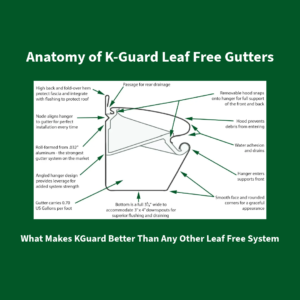
We install gutters after nearly every major hailstorm season, and we’ve seen what works and what fails. The K-Guard system uses .032 gauge aluminum as standard — the same thickness as automotive sheet metal. The seamless design eliminates the weak points where sectional gutters separate under impact. The patented hood covers the gutter, taking direct hail impacts instead of letting stones hammer the trough bottom where they cause drainage problems. We’ve installed systems that have taken multiple direct hits from golf ball-sized hail without functional damage. And it has a lifetime warranty promising that it will never pull away from your fascia. That matters when you’re thinking about the next twenty years, not just the next storm.
K-Guard Rocky Mountain installs a permanent, maintenance-free gutter system built for Colorado homes. If you’re ready to stop maintaining your current gutters, schedule a free estimate with our team.