What Transferable Lifetime Warranty Says to Potential Buyers
When you list your home, a buyer’s inspector will walk your property with a checklist. They’ll look at the roof. They’ll check the foundation. And they’ll absolutely look at your gutters — because gutters that fail lead to water damage, and water damage is the number one reason buyers walk away or demand price reductions.
If you’ve installed a premium gutter system with a lifetime transferable warranty, that becomes a selling point. If you’re still dealing with builder-grade gutters that clog every spring and fall, that becomes a liability. The difference shows up in the inspection report, and it shows up in the buyer’s confidence.
What “Lifetime Warranty” Actually Means in Gutter Products
Not all lifetime warranties are created equal. Most homeowners assume “lifetime” means the product is guaranteed forever, but that’s not always what the fine print says.
There are three common types of gutter warranties you’ll encounter:
Product-only warranties cover manufacturing defects — meaning if the gutter material itself fails due to a defect, the company will replace the product. But you’re responsible for paying someone to remove the old system and install the new one. Labor costs for gutter replacement can easily run $1,500 to $3,000 or more, which makes a product-only warranty far less valuable than it sounds.
Limited lifetime warranties often have restrictions. Some are only valid for the original homeowner. Others exclude labor after the first 10 or 20 years. Many require annual maintenance — which defeats the entire purpose of installing a zero-maintenance gutter system in the first place.
Full lifetime warranties with labor cover both the product and the cost of labor to repair or replace it, for as long as the system is on the home. These are rare, and they’re the only warranties that truly protect your investment.
When you’re comparing gutter systems, ask two questions: Does the warranty cover labor? And is it transferable to the next homeowner?
What “Transferable” Means in Transferable Lifetime Warranty
A transferable warranty means the coverage passes to the next owner when you sell your home. The new buyer gets the same protection you had, for the remaining life of the product.
Here’s how that transfer typically works: When you list your home, you include the warranty documentation in your disclosure materials. The buyer’s agent and inspector will note it. At closing, you notify the gutter company of the sale, and they update their records with the new owner’s information. The warranty remains active without interruption.
Some companies charge a transfer fee — usually $50 to $100 — to process the paperwork. Others, including K-Guard, transfer the warranty at no cost. Either way, the value to the buyer is substantial. They’re inheriting a permanent, professionally installed system that won’t require maintenance or replacement for decades.
From a buyer’s perspective, a transferable lifetime warranty means one less thing to budget for. That matters, especially when they’re already looking at moving costs, property taxes, and inevitable repairs that come with any home purchase.
How to Document Your Warranty for Real Estate Disclosure
When you sell your home, Colorado law requires you to disclose known defects and any recent improvements. A gutter system with a transferable warranty falls into the “improvement” category — it’s an asset, and you want to make sure the buyer knows about it.
Here’s what to include in your disclosure packet:
Copy of the original warranty document. This should include the installation date, the specific terms of coverage, and the contact information for the company that installed the system.
Installation invoice or receipt. This proves the system was professionally installed and shows the buyer what you paid. Specifica.ly for a KG system, including a copy of your contract meets this and the previous requirement.
Transfer instructions. Include a one-page summary explaining how the warranty transfers. If there’s a transfer fee, note it. If the buyer needs to register with the company, include the contact information and website.
Maintenance records (if applicable). If your warranty required periodic inspections or maintenance, include proof that you kept up with those requirements. For truly maintenance-free systems like K-Guard, this isn’t necessary — but if your system had any service visits or repairs, document them. You may also want to include your installation date, which may be relevant for any time-based warranty provisions.
Your real estate agent will add this documentation to the seller’s disclosure statement. It typically goes in the same section where you’d list a new roof, HVAC system, or other major improvements.
Why Buyers Care About Deferred Maintenance
Buyers are sensitive to deferred maintenance because they know what it costs to fix. Foundation repairs average $4,000 to $10,000 or more. Ice dam damage can run into the thousands. Even routine gutter cleaning costs $150 to $300 per visit, and most homes need it two to four times per year.
When a buyer sees gutters that are clogged, sagging, or visibly deteriorating, they see a liability. Their inspector will flag it. Their lender may require repairs before closing. And even if the sale goes through, they’ll negotiate the cost of replacement into the purchase price.
When a buyer sees a premium gutter system with a transferable lifetime warranty, they see the opposite: a problem that’s already been solved, by someone who took care of the home.
That distinction matters more than most sellers realize. Buyers are not just purchasing a house — they’re purchasing the confidence that the house won’t immediately drain their savings.
How K-Guard’s Warranty Compares to Standard Gutter Products
Most builder-grade gutters come with no warranty at all. You might get a one-year labor warranty from the installer, but the gutters themselves are considered a consumable product. When they fail, you replace them at your own expense.
Aftermarket gutter guards — the mesh or foam inserts you can buy at a hardware store — typically carry between a 5 to 20 year product warranty. Labor is almost never covered, and the warranties are rarely transferable. More importantly, these systems often fail within the first few years due to clogging, ice buildup, or poor fit. There’s more cost to consider than just the cost of installation.
K-Guard’s warranty is different in three specific ways:
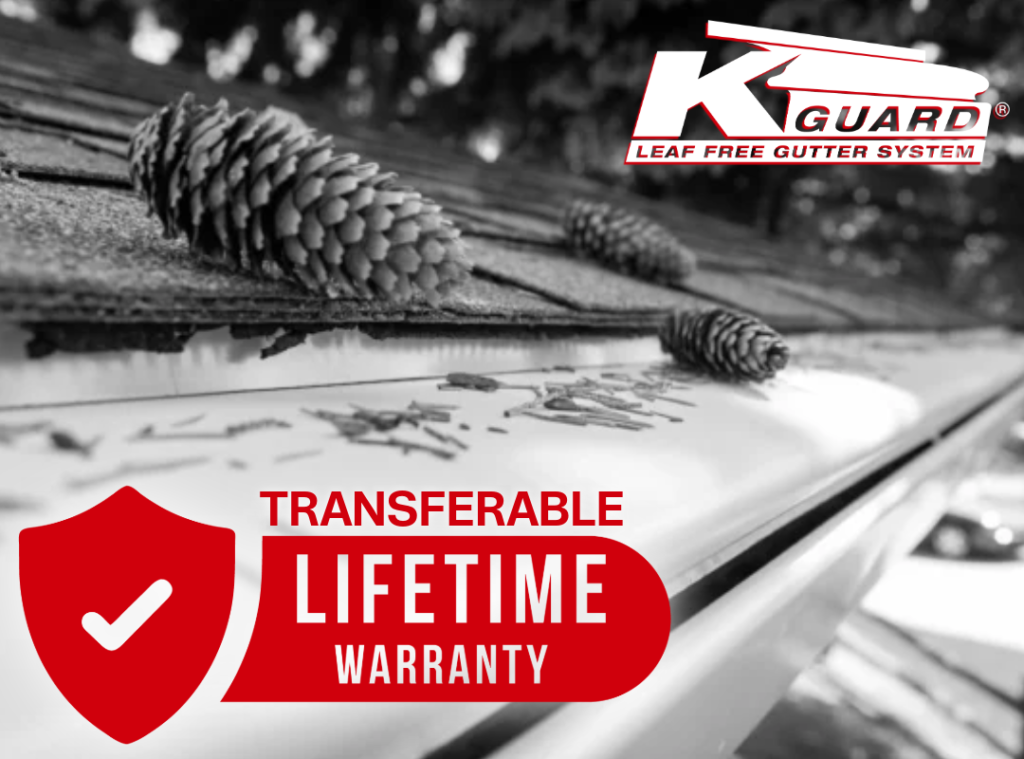
It covers both product and labor. If anything goes wrong with the system — due to defect, installation error, or normal wear — K-Guard will repair or replace it at no cost to you. That includes removing the old system, installing the new one, and disposing of the debris.
It’s transferable at no cost. When you sell your home, the new owner gets the same lifetime coverage you had. There’s no transfer fee, no re-inspection required, and no reduction in coverage.
It’s a true lifetime warranty. There’s no 20-year cap on labor. There’s no requirement for annual maintenance. The system is designed to last as long as the home stands, and the warranty reflects that.
For a buyer evaluating two comparable homes — one with builder gutters, one with a K-Guard system and a transferable warranty — the difference is measurable. It’s not just peace of mind. It’s money they won’t have to spend.
Considering a Gutter System Upgrade?
If you’re planning to sell your home in the next few years — or if you simply want to stop worrying about gutter maintenance — here’s what to do:
- Request a copy of your current gutter warranty (if you have one) and review the terms. Check whether it’s transferable, whether it covers labor, and whether it requires ongoing maintenance.
- Get a professional evaluation of your current gutter system. Look for signs of sagging, rust, clogs, or water damage near the foundation. These are red flags that will show up in a buyer’s inspection.
- If you’re upgrading, ask every contractor about warranty terms before you sign. Get it in writing. Make sure you understand what’s covered, for how long, and whether the warranty transfers.
- Keep all documentation in a dedicated home improvement file. When you sell, you’ll need the original invoice, warranty terms, and installation date.
- If your system requires maintenance to keep the warranty valid, schedule it now and document it. Buyers want proof that the home was well cared for.
The K-Guard Rocky Mountains Perspective
K-Guard Rocky Mountains installs a patented, leaf-free gutter system with a lifetime transferable warranty that covers both product and labor. When you sell your home, the warranty passes to the new owner at no cost — giving them the same protection you had, and giving you a documented selling point that sets your home apart. We’ve seen it make a difference in dozens of transactions, especially for buyers who know what foundation repairs and ice dam damage actually cost.
K-Guard Rocky Mountain installs a permanent, maintenance-free gutter system built for Colorado homes. If you’re ready to stop climbing that ladder, schedule a free quote with our team.