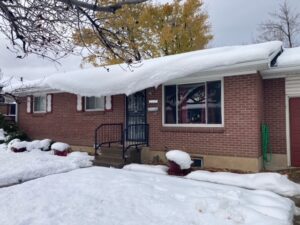

When Spring Snowmelt Reveals What Your Gutters Did All Winter
You’ve owned your home long enough to know the pattern. March arrives, the snowpack starts melting, and you notice water pooling near your foundation (trust us, you don’t want foundation damage). Or worse, staining on your siding that wasn’t there in October. Your gutters handled the fall storms just fine. So what changed? Let’s talk about the regular maintenance every homeowner should perform on their gutters.
You should know that Colorado’s four-season cycle puts more stress on gutter systems than most homeowners realize. What works in July fails in February. A gutter that drains perfectly during summer thunderstorms can ice over completely during a February freeze-thaw event. And because most homeowners only think about their gutters when they’re already failing, the damage compounds quietly until it costs real money to fix.
Why Colorado Gutters Need a Different Maintenance Schedule
Standard gutter maintenance advice is “clean them twice a year”. That doesn’t account for Colorado’s weather patterns. We don’t have two seasons. We have four distinct gutter stress periods, each with different failure modes.
Spring snowmelt moves more water through your gutters in six weeks than summer storms do all season. Fall isn’t just about clearing leaves. It’s about preparing your drainage system for months of freeze-thaw cycles that will exploit every weak point in your system. And winter? Winter is when poorly maintained gutters stop being an inconvenience and start causing interior water damage through ice dams and other failure points.
There are homeowners who avoid expensive gutter-related repairs. Because they don’t ignore their gutters. They inspect them on a schedule that matches Colorado’s actual weather patterns. Here’s what that schedule looks like.
Spring Maintenance: March Through May
Post-Snowmelt Inspection
The first 60-degree day after the last major snow is your inspection window. Look for:
- Water staining on siding below gutter lines — indicates overflow: water isn’t exiting through your downspouts.
- Soil erosion or mulch displacement — shows where water landed.
- Separation between gutters and fascia boards — ice expansion damage. You should not see daylight from behind your gutters.
- Standing water in gutter sections after the snow is gone — sagging or improper pitch
This inspection tells you what damage occurred during winter. Address these issues before May storms arrive, or you’ll be dealing with compounding problems plus cottonwood seed buildup. Check out this article for more Spring Gutter Cleaning Tips.
Cottonwood Preparation (Late April to Early June)
If you have cottonwood trees within 100 feet of your home, you already know what’s coming. Those white seeds look harmless, but they mat together when wet and form dense clogs that block downspouts completely. Standard gutter guards, like mesh screens, catch these seeds on top, creating a soggy, decomposing blanket that’s harder to remove than just cleaning the gutters.
Before cottonwood season peaks, verify all downspouts are clear and flowing. If you use gutter guards, inspect them. If seeds from last year are still visible, they’re creating mold and blocking water flow. They need to be addressed right away.
Summer Maintenance: June Through August
Post-Hail Inspection
Colorado Front Range hailstorms happen fast, and most homeowners check their roof but forget their gutters. Hail damage to gutters shows up as dents and creases that disrupt water flow, creating low spots where water and debris collects. After any hailstorm that was bad enough to damage cars or patio furniture, walk your roofline and look for:
- Visible dents in gutter channels
- Detached hangers — hail impact can knock them loose
- Downspout damage where they connect to gutter outlets or underground drains
Minor hail damage won’t cause immediate failure, but it accelerates wear. Those small dents collect pine needles and sediment, which speeds up clog formation and adds weight, eventually pulling the gutters away from your fascia.
Thunder Season Drainage Check
July and August thunderstorms drop water fast, sometimes an inch in 20 minutes. This is when you find out if your gutters have enough capacity. During or immediately after a heavy storm, go outside and watch how your system handles the flow. If you see water overshooting the gutters or pouring over the front edge, you have either a clog or a capacity problem. Standard 4-inch gutters installed in the 1980s and 1990s often can’t handle Colorado’s modern storm intensity.
Fall Maintenance: September Through November
Pre-Freeze Cleaning (Late September to Mid-October)
This is the most important maintenance window of the year. Everything you don’t remove now will freeze in place by Thanksgiving and stay there until March. Focus on:
- Complete debris removal from gutter channels — leaves, pine needles, shingle grit
- Downspout flushing — use a hose to verify water flows freely all the way through your downspout
- Gutter hanger tightening — freeze-thaw cycles will exploit any loose brackets
- Ground-level drainage check — make sure downspout extensions direct water at least 4 feet from your foundation
If you’re cleaning your own gutters, late September is safer than late October. You’re not working in near-freezing temperatures, and the leaves haven’t all fallen yet. This means you might need to do a second pass in early November, but this method may still prove to be easier.
The Reality of Fall Cleaning Costs
Professional gutter cleaning in the Denver metro area runs $175 to $350 per visit, depending on home size and gutter height. Two-story homes cost more. Homes with steep-pitch roofs cost more. And if you waited until November and there’s already ice in the gutters, some companies won’t touch it until spring. Or they’ll charge a much higher premium for winter work.
That’s $350 to $700 per year, every year you own the home. Over 20 years, that’s $7,000 to $14,000 in maintenance costs for a component that most homeowners consider “maintenance-free” because it doesn’t have moving parts.
Winter Maintenance: December Through February
Ice Dam Monitoring
You can’t clean gutters once they’re frozen, but you can watch for ice dam formation. An ice dam forms when heat from your attic melts snow on your roof, the water runs down to the cold eaves, and refreezes in your gutters. This creates a growing wall of ice. Eventually, water becomes trapped and backs up under your shingles and into your home.
Signs you have an ice dam forming:
- Icicles hanging from gutter edges — pretty, but dangerous
- Ice visible inside gutter channels
- Water staining on exterior walls below the roofline
- Interior water stains on ceilings near exterior walls
Once an ice dam forms, removal requires either professional help or you risk roof damage. Prevention is about attic insulation and ventilation, but proper gutter drainage gives melting snow a path away from your home before it can refreeze.
What This Looks Like with K-Guard vs. Standard Gutters
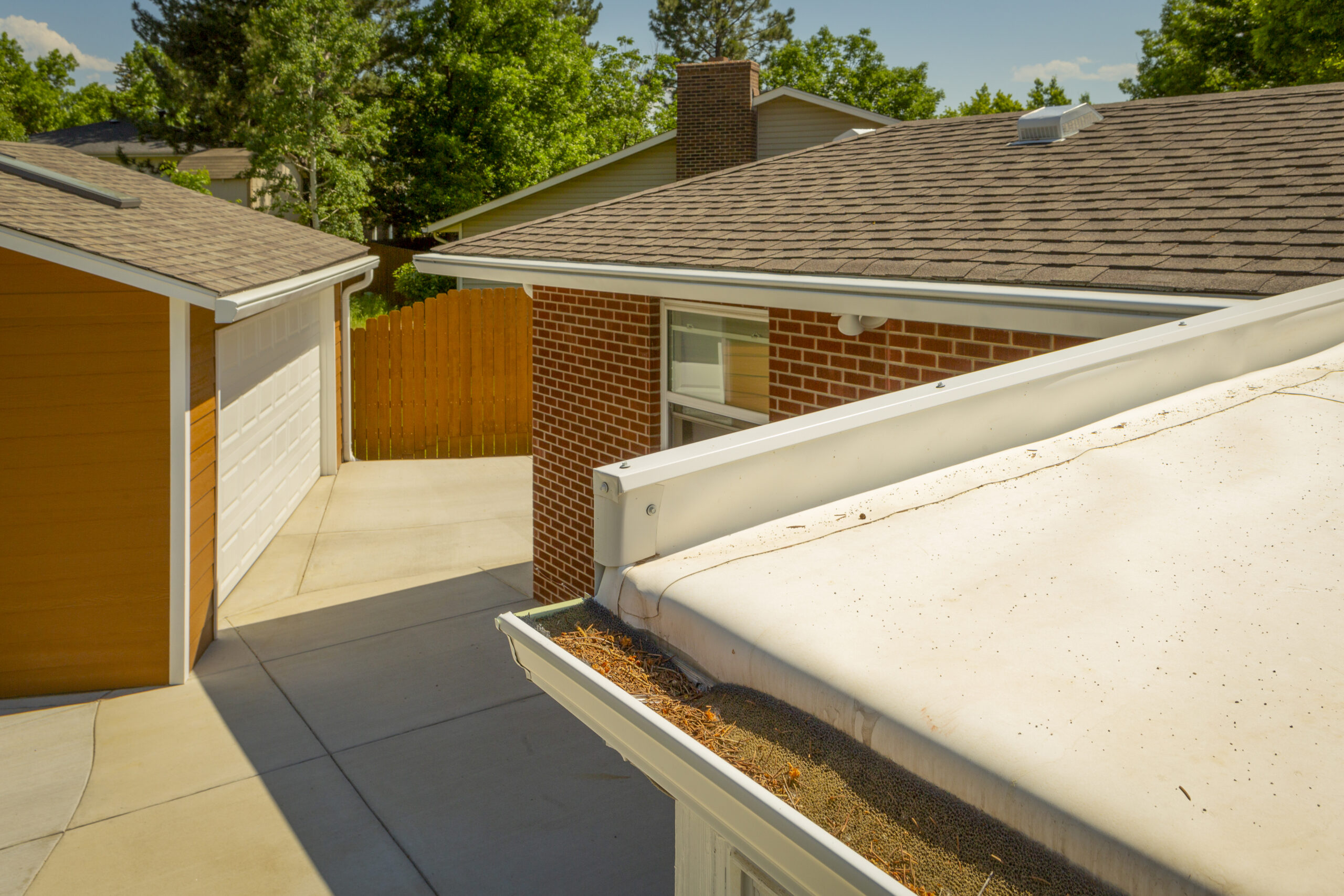
Background: K-Guard Leaf Free Gutter Systems
The seasonal checklist above assumes standard open-top gutters. Every inspection point, every cleaning task, every capacity concern exists because debris can enter the system and water can freeze in place. K-Guard is different than traditional gutters..
K-Guard’s patented hood design changes the equation. The curved aluminum hood allows water in while keeping debris out. There’s no mesh that catches cottonwood seeds, no screens that ice over, no open channel where pine needles accumulate. The system uses larger troughs, the equivalent of a 6-inch gutter with higher capacity to handle Colorado storm events.
Your seasonal maintenance shifts from “clean and inspect” to “inspect only.” You’re checking ground-level drainage, watching for foundation issues, and monitoring how the system handles heavy snow years. But you’re not climbing ladders. You’re not hiring cleaning services. And you’re not dealing with the consequences of deferred maintenance, because there’s no maintenance to defer.
Next Steps for Colorado Gutter Maintenance
- Schedule your spring inspection now — late March is best, but anytime after snowmelt but before cottonwood season.
- Set calendar reminders for each season’s key tasks — don’t wait until you see a problem.
- Calculate your actual annual gutter maintenance costs — your time, ladder safety and equipment if you DIY or cleaning fees.
- Document problem areas with photos — track which sections overflow, sag, or ice over repeatedly.
- Get cost estimates for both repair and replacement — sometimes fixing a 30-year-old system costs more than upgrading.
The K-Guard Rocky Mountains Perspective
We’ve installed gutter systems on Colorado Front Range homes since 2001. The homeowners who call us aren’t looking for the cheapest option. They’re looking for the last gutter system they’ll ever need to buy. K-Guard’s lifetime transferable warranty covers materials, installation, and performance. If cottonwood seeds clog it, we fix it. If snowmelt overwhelms it, we fix it. The system is engineered for Colorado weather patterns because it was developed here. It will perform here for decades, not just pass inspection and move on.
K-Guard Rocky Mountain installs a permanent, maintenance-free gutter system built for Colorado homes. If you’re ready to stop climbing that ladder, contact our team today.