
Why Do Icicles Always Form on Your Front Entry
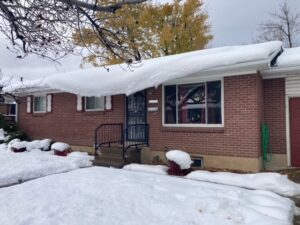
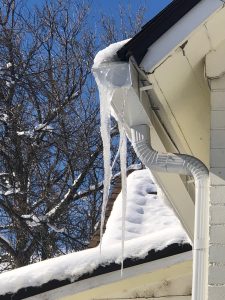
You’ve seen it every winter: a row of icicles hanging from the gutter, right above your front door. They look harmless until someone walks underneath and you realize they’re standing beneath 20 pounds of ice anchored by nothing but freezing water. Your mail carrier notices. Your guests hesitate. You start using the garage entrance instead.
This isn’t just a cosmetic problem. Icicles forming at entry points create a legitimate safety hazard — and they’re a visible symptom of a bigger issue that’s quietly working against your home’s structure.
What’s Really Happening When Icicles Form
Icicles don’t form randomly. They appear where water is dripping slowly and freezing in place. On most Colorado homes, that means one of two things is happening: either your gutters are clogged and water is overflowing at a specific spot, or water is flowing correctly but hitting cold at the gutter edge and freezing before it can drain away.
If you have standard open-top gutters, the most common cause is debris accumulation. Pine needles, shingle grit, and cottonwood seed, anything that can pack into the gutter channel and create a dam. Water pools behind it, overflows at the same spot every time, and freezes overnight when temperatures drop. By mid-January, you’ve got a 12-inch ice formation hanging directly over the walkway.
But here’s what surprises most homeowners: icicles also form on covered gutter systems — all types of guards, screens, hoods and helmets get icicles. If you installed a gutter guard system thinking it would solve this, you’ve probably noticed it didn’t. That’s because most gutter guards block debris but don’t address the freeze-thaw cycle that creates ice buildup at the gutter edge.



Why Gutter Guards Don’t Prevent Ice Formation
Standard gutter guards keep leaves out. They do not keep water from freezing. When snowmelt or rain hits a 28-degree gutter guard in February, it freezes on contact. The guard itself — whether it’s mesh, foam, or a solid hood — becomes a platform for ice to build on.
This is especially common at north-facing entries, shaded overhangs, and anywhere your roofline funnels water toward a single drainage point. The gutter guard is doing its job. The water is flowing. But physics is still physics: cold metal plus slow-moving water equals ice.
Most homeowners don’t learn this until after installation. The salesperson showed them how the system keeps pine needles out — but nobody mentioned what happens when it’s 15 degrees outside and your gutters are draining snowmelt all day.
Heat Cable: The One Solution That Addresses the Root Cause
If you want to eliminate icicles at entry points, you need to prevent freezing at the source. That means installing heat cable in the gutter and downspout where ice typically forms. Heat cable is a low-wattage electric heating element that runs along the gutter channel and down through the downspout, keeping water above freezing long enough to drain completely.
It’s not new technology. Builders have used heat cable in commercial applications and high-risk residential areas for decades. What is new — and what most homeowners don’t realize — is that heat cable cannot be installed on most covered gutter systems.
LeafGuard, Gutter Helmet, and similar systems become a closed system, once they are installed. The cover is permanently attached to the gutter channel. There’s no way to route heat cable into the channel without cutting or modifying the system, which voids the warranty and often doesn’t work anyway because the cable can’t make proper contact with the metal.
The foam insert systems are even worse. You’d have to remove the foam entirely, which defeats the purpose of having it in the first place.
K-Guard’s Design Allows Heat Cable Installation
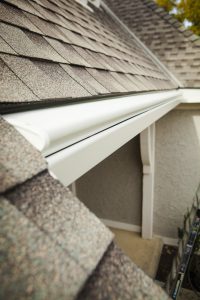
K-Guard uses a different approach. The system has a curved hood that covers the gutter opening, but the hood is not sealed to the gutter itself. Water flows on both sides of the hood, into a large-capacity channel, and drains through oversized outlets. Because the channel remains accessible, heat cable can be installed even years after the system has been installed.
This isn’t a workaround or a modification. It’s designed into the system. K-Guard installs heat cable as a standard option on any home where ice buildup is a known issue. Typically north-facing sections, shaded entries, and areas with heavy snowmelt exposure. If you know you have ice issues in certain areas, then we can install the heat cable at the same time we install the gutters.
The cable runs on a thermostat and activates automatically when temperatures drop into the freezing range. It uses roughly the same amount of electricity as a couple of incandescent light bulbs, and it only runs during freeze-thaw cycles — not all winter. For most Denver-area homes, that translates to 15-25 days of actual operation per season.
What Heat Cable Actually Costs — And What It Prevents
Heat cable installation typically adds $400-$5,000 to a gutter project, depending on how many linear feet of coverage is needed and if roofline coverage is also needed. That includes the cable itself, the thermostat, and professional installation.
Compare that to what you’re preventing. A slip-and-fall incident on an icy walkway can result in serious injury — broken wrists, hip fractures, head trauma. If it happens to a guest or service provider, you’re looking at premises liability. Your homeowner’s insurance will cover it, but your coverage will reflect those changes.
Beyond liability, ice dams that form along the gutter edge work their way up under shingles and cause interior water damage. The average ice dam repair — including roof work, insulation replacement, and drywall restoration — runs $4,000-$10,000. A single winter event can cost more than a decade of heat cable operation.
When Heat Cable Makes Sense for Your Home
Not every home needs heat cable on every section of gutter. K-Guard’s installation team evaluates your specific exposure during the estimate. Here’s what they look for:
- North-facing entries: These areas receive little to no direct sun during winter and stay below freezing for days at a time
- Shaded overhangs: Anywhere a tree, second-story roofline, or adjacent structure blocks sunlight
- Valley channels: Roof valleys concentrate water flow into a single drainage point, increasing the chance of ice buildup
- Areas with prior ice problems: If you’ve had icicles or ice dams in the same spot for multiple winters, the pattern will repeat
For most homes at lower elevations, like the Denver area, heat cable makes sense on 20-40% of the total gutter footage. You are typically heating the sections where people actually walk and where water concentration is highest. In the mountains, you may need to consider heating the entire gutter system, even zig zagging the heat cable along the roof line. The need really is specific to each home.

What to Expect During Installation
Heat cable can install at the same time as the gutter system or you can add it later to the KGuard gutter system. When homeowners aren’t initially sure about past ice issues, it can be best to wait and see. KGuard customers can wait through a full winter season if they wish, to determine if their gutters will have icing issues. And if so, where those issues are occurring. That way, you only get heat cable in the areas that need it most.
The cable is secured along the bottom of the gutter channel using a flexible metal tape that hold it in place without restricting water flow. It extends down through the downspout ensuring water can drain completely even when temperatures drop below 20 degrees. If an underground drain is present, the heat cable will be extended about 2 feet into that drain as well. The goal is to make sure water can exit the gutter system fully. Heat cable is also installed in the nose of KGuard’s hood, so that the hood and trough prevent ice from forming.
The heat cable has a thermostat that will cause it to start heating once the outside air reaches a particular temperature, usually around 37 degrees Fahrenheit. It will stop heating automatically once the air heats up to around 50 degrees Fahrenheit. This covers the freeze-thaw range without running unnecessarily.
Because K-Guard’s channel design allows cable installation without modification, the warranty remains intact. That’s not the case with retrofit cable on LeafGuard or similar systems, where any alteration typically voids coverage.
Next Steps for Eliminating Icicles at Your Entry
- Identify where icicles form consistently: Walk your property after a winter storm and note which sections develop ice buildup
- Check if your current gutter system allows heat cable installation: If you have LeafGuard, or Gutter Helmet system, it likely doesn’t
- Evaluate whether north-facing or shaded areas are contributing: These sections will always be higher risk regardless of gutter type
- Get a site-specific recommendation: A professional installer can assess which sections need heat cable and which don’t
- Consider the cost of prevention versus the cost of one injury or ice dam repair: The math almost always favors installation
The K-Guard Rocky Mountains Perspective
We install self-regulating heat cable on about 20% -30% of the K-Guard systems we put on Colorado homes — not because it’s a high-margin add-on, but because it solves a real problem that other systems can’t address. When a homeowner tells us they’ve had the same icicle formation for five winters running, we know exactly what’s happening and exactly how to fix it. The technology isn’t complicated. The difference is whether your gutter system’s design allows you to use it.
Schedule a Free Estimate With Our Team
K-Guard Rocky Mountain installs a permanent, maintenance-free gutter system built for Colorado homes — including heat cable on sections where ice formation is a known issue. If you’re ready to stop worrying about icicles over your front door, schedule a free quote with our team. We’ll assess your roofline, identify high-risk areas, and give you a clear recommendation on where heat cable makes sense for your specific property.