Would You Know if Your Gutters are Failing?
Home maintenance is important to you. So you pay attention to what matters, and make repairs when needed. But here’s a question most homeowners don’t think about until it’s too late: how do you actually know if your gutters are doing their job? Every homeowner should learn how to spot failing gutters.
Most of us assume gutters work until we see water pouring over the edge during a rainstorm — or worse, until we notice cracks in the foundation or water stains in the basement. By then, the damage is already happening.
The Problem with Gutters That Look Fine
Here’s what makes gutter failure so insidious: a gutter can look perfectly intact from the ground and still be failing completely. The water might be moving through the system, but if it’s not being directed away from your home, you’re still at risk.
And in Colorado, where we deal with heavy spring snowmelt, sudden summer downpours, and freeze-thaw cycles that can turn small problems into major ones, a gutter that’s “sort of working” is a gutter that’s going to cost you money.
What Properly Functioning Gutters Actually Do
Before we talk about testing, let’s be clear about what gutters are supposed to accomplish. Their entire purpose is to collect water from your roof and move it at least three to six feet away from your foundation. That’s it. If water is pooling next to your home, soaking into the soil around your basement walls, or running back toward your foundation, your gutters are failing — even if they’re not visibly clogged.
The consequences of that failure are expensive. Foundation repairs in Colorado average between $4,000 and $10,000. Basement waterproofing can run higher. And if water freezes in cracks during winter, you’re looking at structural damage that compounds every season.

Inspect Your Gutters During a Rainstorm
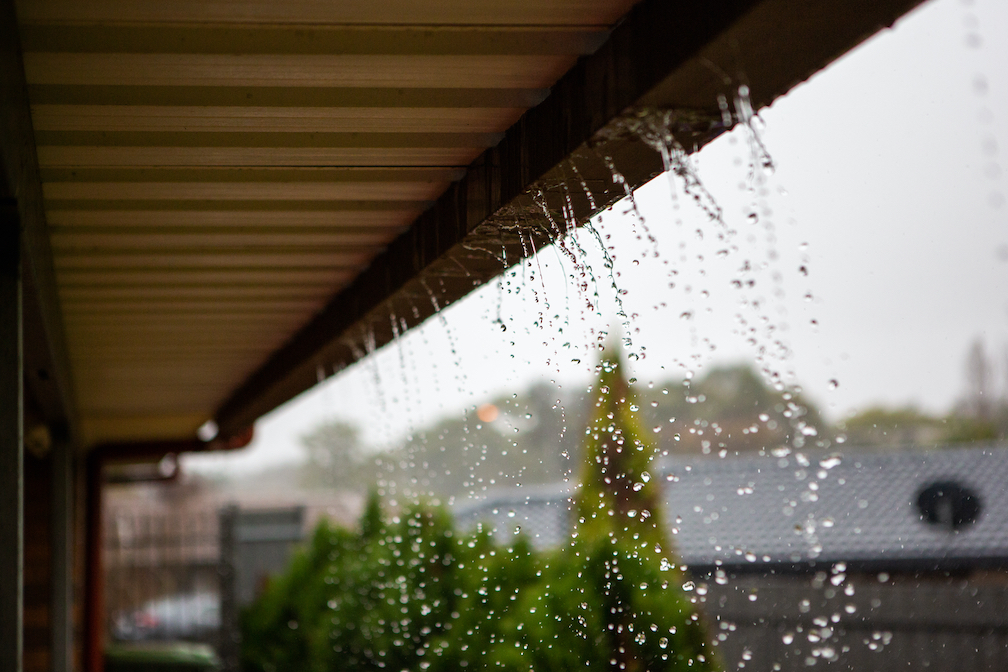
The single best time to evaluate your gutters is during a moderate rain. Not a drizzle — you need enough water flow to see how the system handles volume. Here’s what to look for:
Stand back and watch the roofline. Water should flow smoothly into the gutter along the entire edge. If you see water overshooting the gutter or pouring over the front edge, that’s a capacity problem. Either the gutter is clogged, undersized for Colorado’s storm patterns, or pitched incorrectly.
Check the downspouts. Water should exit the downspouts in a steady, strong flow — not a trickle, not in spurts. If the flow is weak or inconsistent, there’s a blockage somewhere in the system. Pine needles, cottonwood seeds, and roof grit are the usual culprits in our region.
Watch where the water goes after it leaves the downspout. This is the step most homeowners skip, and it’s the most important one. Walk to each downspout outlet and see where the water is going. Is it running onto a splash block or through an extension that carries it away from the house? Or is it just dumping straight down next to your foundation?
If water is pooling within three feet of your home, your gutters aren’t protecting you — they’re just concentrating the problem to specific areas on the ground.
 How to Determine Your Gutters Are Working Between Storms
You don’t need to wait for rain to spot gutter problems. Here are the signs to look for on a dry day:
Staining or mildew on siding. Vertical streaks or discoloration below the gutter line mean water has been overflowing regularly. This happens when water is forced over the edge instead of into the downspout.
Sagging or pulling away from the fascia. Gutters are designed to handle water, not the weight of water plus soaked leaves and sediment. If a section is visibly drooping or the hangers have pulled loose, that’s a sign of chronic excess weight.
Erosion or soil washout near the foundation. Walk your home’s perimeter and look at the ground next to the foundation. If you see channels, exposed soil, or mulch that’s been washed away, water is landing too close to the house.
Cracks in the foundation or basement walls. Horizontal cracks, stair-step cracks in brick or block, or water stains on interior basement walls are all late-stage symptoms of water intrusion. By the time you see these, the damage is significant.
The Downspout Extension Test
Here’s a simple test you can do yourself. Take a garden hose to one of your downspouts and run water through it for several minutes at moderate pressure. Then walk around to the outlet and measure how far the water travels from your foundation.
If it’s less than four feet, you need extensions. If the water is pooling or running back toward the house, you need to regrade the soil or install underground drainage. Or if you have the room add a longer extension. This is not optional — it’s the difference between a gutter system that works and one that just delays the problem.
What About Gutter Guards or Screens?
Many homeowners install mesh screens or foam inserts hoping to reduce maintenance. The reality is that most of these products create their own problems. Mesh screens can trap small debris on top, forming a mat that blocks water flow. Foam inserts absorb water and grow mold. And neither option stops the sediment and granules that wash off your roof from building up inside the gutter trough itself.
If you’re cleaning your gutters twice a year — or paying someone else to do it — and you’re still seeing overflow or poor drainage, the issue isn’t just debris. It’s the design of the system.
When to Call a Professional
You should schedule a professional gutter inspection if you notice any of the following:
- Water stains or mildew on your home’s exterior
- Visible sagging, rust, or separated seams
- Water pooling near your foundation after rain
- Basement moisture or musty odors
- Ice dams forming along your roofline in winter
These are not minor cosmetic issues. They are warnings that your home is at risk, and the longer you wait, the more expensive the fix becomes.
Next Steps for Testing and Maintaining Your Gutters
- Schedule your inspection during the next moderate rainstorm — put a reminder in your phone right now.
- Walk the perimeter of your home and check for erosion, staining, or sagging gutter sections.
- Test your downspout outlets with a garden hose and measure the distance water travels from your foundation.
- If water is draining within three feet of your home, install extensions or regrade the soil.
- If you see chronic overflow, sagging, or interior water damage, contact a professional for a full system evaluation.
The K-Guard Rocky Mountains Perspective
At K-Guard Rocky Mountains, we’ve inspected thousands of Colorado homes. We discover gutters that have been failing for years though the homeowners thought they were fine. Our patented gutter system is designed to eliminate the two biggest causes of failure — clogs and undersized capacity. The hood keeps debris out, and the oversized trough handles the heavy water volume we get during spring snowmelt and summer storms. It’s a permanent solution for homeowners who are done climbing ladders and ready for a system that always works.
K-Guard Rocky Mountains installs a permanent, maintenance-free gutter system built for Colorado homes. If you’re ready for a zero maintenance gutter system, schedule a free quote today.