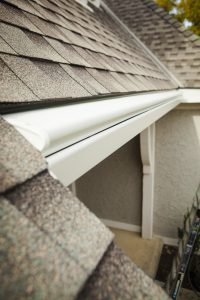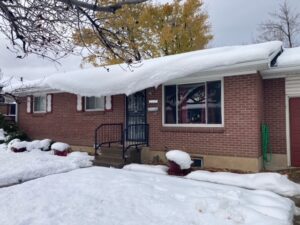
Seamless Gutters in Colorado Springs: What On-Site Forming Fixes, and What Long Runs Still Need
Seamless gutters in Colorado Springs get sold on one idea, the fact that fewer joints mean fewer leaks. A sectional gutter arrives in ten foot lengths and gets lapped together on the ground, so a 60 foot eave can carry five or six sealed laps. Each lap is a spot where the sealant will age and deteriorate, the metal moves back and forth, and water then finds a path to your fascia. A seamless gutter for that same eave gets rolled out of a coil on your driveway in one continuous piece, so the only joints left are the ones the house’s geometry forces on you at corners, outlets, and end caps.
Most quotes stop there and skip the part that comes after forming, which is that a single 60 foot piece of metal grows and shrinks every day and needs somewhere to put that movement. That one detail tells you more about the quality of a gutter job than the word seamless does.
What you actually get when the gutter is formed on your driveway
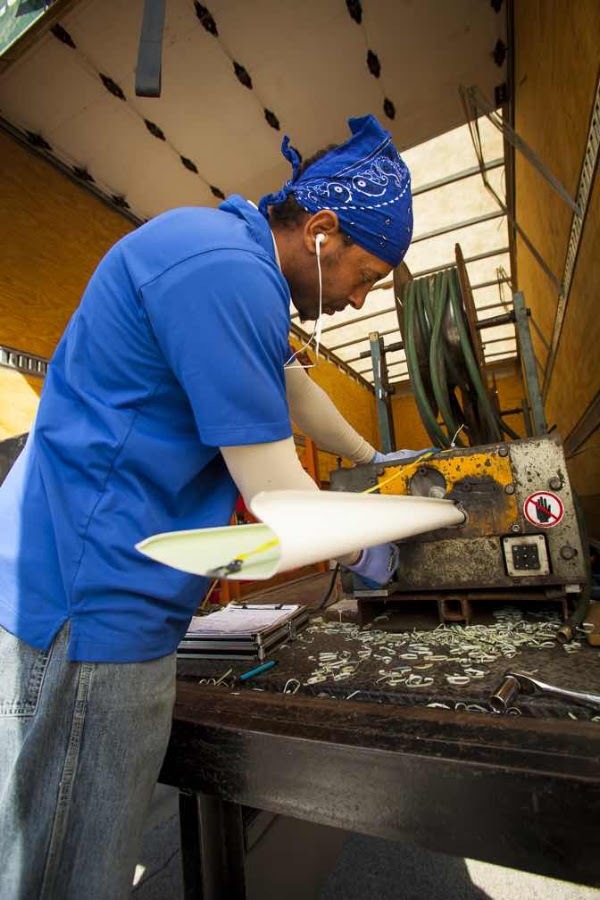
A forming machine pulls flat aluminum coil through a set of rollers and shapes it into the finished profile at the length your eave needs. The crew measures the run, forms it in one piece, then hangs it, which takes the lapped seams of a sectional job out of the equation. Fewer joints mean fewer sealant lines to maintain and fewer spots where debris collects on a raised lap.
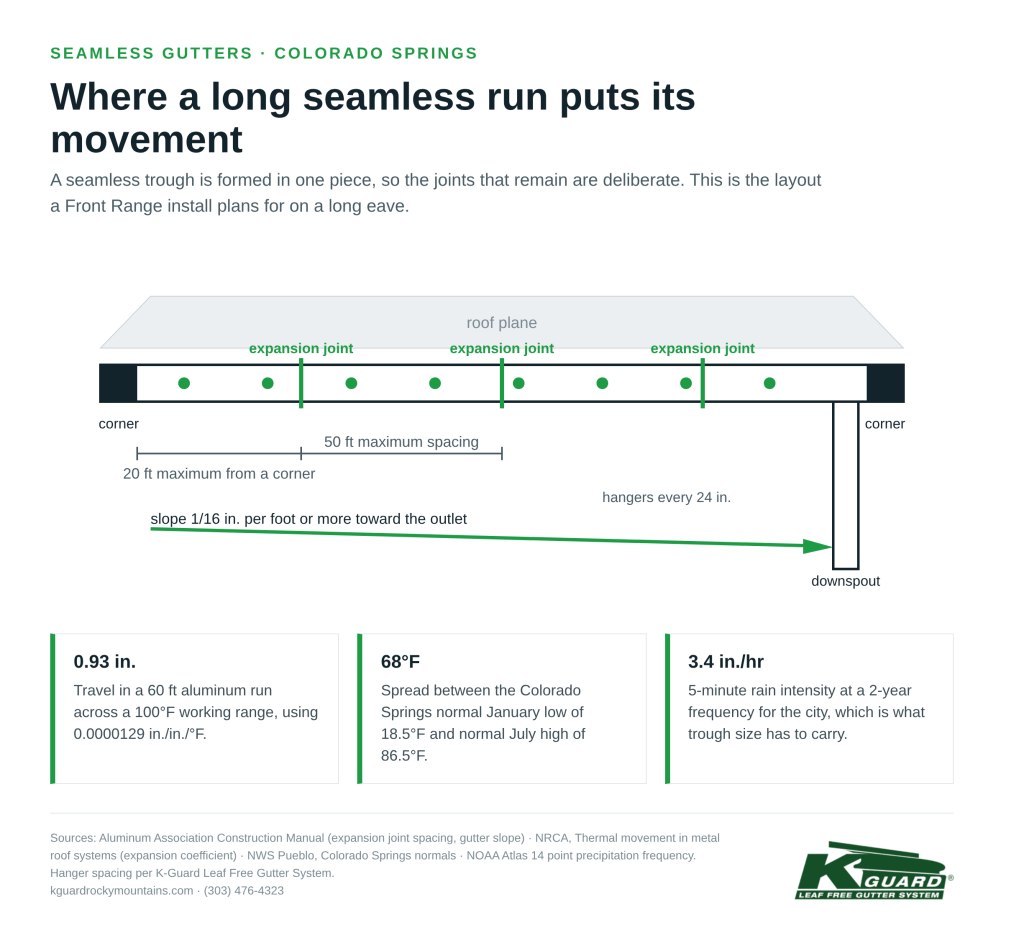
Corners and downspout outlets are still fabricated joints either way, and both need the same care as the trough. The trough also has to be pitched, because water sitting flat in a gutter breeds mosquitoes, holds grit, and adds dead weight to the hangers. The Aluminum Association’s Construction Manual calls for a slope of 1/16 inch per foot or more toward the leaders, which is about half an inch over an 8 foot span and invisible from the sidewalk.
Seamless gutters in Colorado Springs still move with the temperature
Your gutter is metal sitting in the sun, and metal changes length as it heats and cools. Aluminum moves about 0.0000129 inch per inch per degree Fahrenheit, which the NRCA lists in its guide to thermal movement in metal roof systems alongside steel and copper. That number looks tiny until you multiply it by a long run and a Front Range temperature spread.
The National Weather Service in Pueblo puts the Colorado Springs normal January low at 18.5 degrees and the normal July high at 86.5 degrees, a 68 degree swing between typical winter mornings and typical summer afternoons. Dark metal in direct July sun runs hotter than the air around it, so a 100 degree working range across the year is a reasonable planning figure and it is the same range NRCA uses in its own worked example.
How much movement your run has to absorb
Here is what those two numbers produce on real eave lengths. The calculation is straightforward, length in inches times 0.0000129 times the temperature change.
| Continuous run | Movement across a 68°F swing | Movement across a 100°F swing |
|---|---|---|
| 20 ft | 0.21 in | 0.31 in |
| 40 ft | 0.42 in | 0.62 in |
| 60 ft | 0.63 in | 0.93 in |
| 80 ft | 0.84 in | 1.24 in |
| 100 ft | 1.05 in | 1.55 in |
Coefficient 0.0000129 in/in/°F for aluminum per NRCA. Temperature spread from NWS Pueblo Colorado Springs normals. A 68°F swing reflects normal seasonal air temperatures, and 100°F allows for sun heating on the metal itself.
A 40 foot back eave absorbs roughly half an inch of travel. Run a 100 foot elevation in one piece and you are past an inch and a half, enough to buckle a trough, tear at an outlet, or pull hangers loose from the fascia.
The joints you can’t remove, and how they should be built
This is why the Aluminum Association manual limits continuous length instead of treating longer as better. It calls for expansion joints on long straight runs at spacings no greater than 50 feet, and within 20 feet of inside and outside corners. A corner locks one end of the run in place, which forces the movement toward the other end.
A quote for a very long single-piece run with no mention of where the movement goes is worth a question. Ask the installer where the expansion joints land, how corners are made, and how the trough is fastened. Hanger design matters here too, since the K-Guard Leaf Free Gutter System uses patented all-weather polymer hangers every 24 inches, and consistent hanger spacing keeps the pitch you paid for from sagging between supports as seasons cycle.
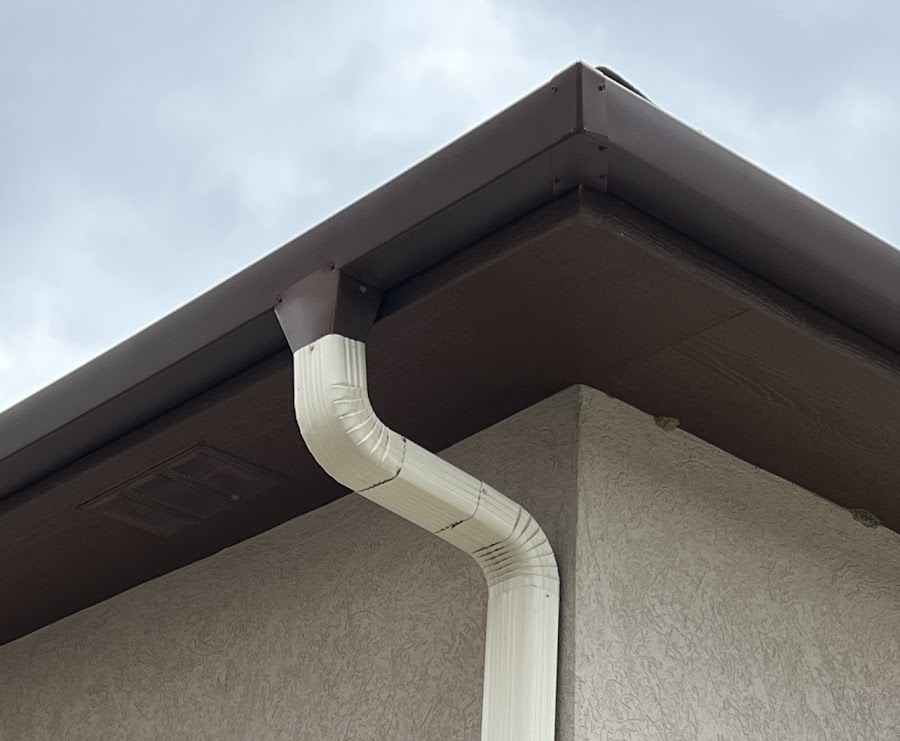
Sun above 6,000 feet is harder on your finish than the rain
Colorado Springs sits high enough that thinner air filters less ultraviolet light, with NOAA’s city weather station at 6,181 feet. The EPA’s Guide to the UV Index puts the increase at about 2 percent for every 1,000 feet of elevation. At this elevation that works out to roughly 12 percent more UV load each year than the same gutter would see at sea level. Chalking and fading show up first on south and west elevations.
Heavy duty non-corrosive alloy resists the corrosion that eats at cheaper metal, and a paint warranty that can be transferred once to the next owner, with written notice, keeps that coverage from ending at the sale. K-Guard systems come in 37 colors, so you can pick a shade that ages next to your trim.
Sizing beats seams in a Front Range cloudburst
Seams have nothing to do with capacity. When a July storm parks over the Colorado Springs foothills, water arrives faster than most residential gutters were built to carry. NOAA’s Atlas 14 point precipitation data for the city puts the 5 minute peak intensity near 3.4 inches per hour at a 2 year frequency, rising to about 5.3 inches per hour at 10 years. Short bursts at that rate overrun an undersized trough no matter how it was assembled.
That is where trough and downspout volume determine the outcome. K-Guard troughs and downspouts run about 40 percent larger than typical gutter guards, and the curved hood covers the opening so leaves and pine needles shed off the front instead of settling inside. If your current gutters overflow in hard rain while staying visibly clean, the sizing and capacity of the trough is the problem.
Comparing seamless gutters in Colorado Springs comes down to what the paperwork says. Get gutter size, hanger spacing, joint and outlet locations, and the pitch written into the scope, then judge the quotes against each other. At K-Guard Rocky Mountains, we install new seamless systems across the Front Range and you can start with a written estimate on the pricing page or by calling (303) 476-4323.
FAQ
Q: Are seamless gutters really joint free? A: No. The trough is formed in one continuous piece for each run, which removes the lapped joints a sectional gutter needs every ten feet. Corners, downspout outlets, end caps, and expansion joints on long runs are still fabricated connections.
Q: How long can one seamless run be? A: The Aluminum Association’s Construction Manual calls for expansion joints at spacings no greater than 50 feet on long straight runs, and within 20 feet of inside and outside corners, so length is limited by where movement can be absorbed rather than by the forming machine.
Q: Do seamless gutters expand and contract in Colorado? A: Yes. The metal moves about 0.0000129 inch per inch per degree Fahrenheit, so a 60 foot run travels roughly nine tenths of an inch across a 100 degree working range. A good install plans for that movement at the joints and hangers.
Q: Does high elevation affect gutter finishes in Colorado Springs? A: Ultraviolet exposure rises about 2 percent per 1,000 feet of elevation according to the EPA, so finishes here face more UV load each year than at sea level. A non-corrosive alloy and a transferable paint finish warranty are the practical protections.
Q: Will seamless gutters stop overflow during heavy rain? A: Not by themselves. Overflow is usually a capacity or blockage issue, and NOAA data shows 5 minute rain intensities near 3.4 inches per hour at a 2 year frequency in Colorado Springs. Larger troughs and downspouts with a covered opening handle those bursts better than a standard sized gutter.
Q: What should a Colorado Springs gutter quote include? A: Gutter and downspout size, hanger type and spacing, slope toward the outlets, the location of corners and expansion joints, the color, and the warranty terms in writing. A quote listing only linear feet and a price leaves too much unspecified to compare.
Protect your fascia, siding, and foundation before the next hard rain. Request a written estimate on the K-Guard Rocky Mountains pricing page or call (303) 476-4323 to schedule a measurement.