
Steel Gutters vs. Aluminum Gutters: The Ongoing Debate
Maybe you’ve noticed rust stains streaking down your siding. Or your steel gutters have started sagging between the hangers or pulling away from the fascia board after years of Colorado’s freeze-thaw cycles. If you’re researching the best gutter material to replace your gutters, you’re asking the right question. It’s a long standing debate. and the answer depends on what’s actually happening to your home right now.
Steel gutters were common on homes built in the 1970s and early 1980s. They were strong, affordable, and contractors installed millions of linear feet across the Denver metro and surrounding areas. But steel has one fundamental problem in Colorado’s climate: it rusts. Rust doesn’t just look bad. It’s a sign of failure.
Why Steel Gutters Fail in Colorado
Steel gutters corrode from the inside out. You see the rust streaks on the exterior, but the real damage is happening where water sits — in the seams, at the downspout outlets, and along the bottom of the trough where debris collects moisture.
Colorado’s climate accelerates this process. Our spring snowmelt cycles mean water sits in gutters for weeks at a time. Summer hailstorms pit the surface. Fall brings cottonwood leaves and pine needles that hold moisture against the metal. Winter ice expands in every microscopic crack. A steel gutter installed in 1978 has been through nearly 50 of these cycles. The metal fatigues. The protective coating wears through. Rust wins.
Most homeowners don’t realize their steel gutters have failed until water starts pooling against the foundation or seeping into the basement. By then, you’re not just replacing gutters — you’re repairing foundation damage that averages $4,000 to $15,000.
Is Aluminum Gutter Better in Colorado?
Aluminum doesn’t rust. That’s the most important fact. When you compare steel vs. aluminum for gutter material in Colorado’s wet-dry-freeze climate, aluminum eliminates the single biggest failure point.
Aluminum forms a thin oxide layer when exposed to air — a protective coating that actually prevents further corrosion. Steel forms iron oxide, which we call rust, and it keeps spreading until the metal fails completely. This matters in Colorado because your gutters spend months each year soaked with snowmelt, then baking in high-altitude UV, then freezing solid overnight.
Aluminum is also significantly lighter than steel — about one-third the weight. This reduces stress on your fascia board and hangers. If you’ve noticed your steel gutters sagging or pulling away from the roofline, it’s partly because decades of water weight and thermal expansion have loosened the fasteners. Aluminum puts less continuous load on those attachment points.
Here’s what the numbers look like for a typical 2,000-square-foot ranch home in Lakewood:
- Steel gutter system weight (empty): 180-220 lbs
- Aluminum gutter system weight (empty): 60-75 lbs
- Additional load during spring snowmelt: 300-400 lbs of water and ice
Your fascia board wasn’t designed to hold that steel system’s weight. Aluminum reduces the structural load by roughly two-thirds before you even account for water.
What About Durability and Lifespan?
Steel gutter manufacturers used to claim a 20-year lifespan. In practice, most steel gutters in Colorado start showing rust damage within 15 years and require replacement by year 25. The coating technology has improved since the 1970s, but steel still corrodes when the coating fails — and coatings always fail eventually.
Aluminum gutters typically last 30-40 years in Colorado’s Front Range climate, and premium aluminum systems with baked enamel finishes can exceed 50 years. The material itself doesn’t degrade the way steel does. What eventually fails in an aluminum system is usually the seams or hangers — mechanical connections, not the metal.
If you’re trying to decide whether to repair or replace your steel gutters consider this: if your home was built in 1978 and still has the original steel gutters, those gutters are nearly 50 years old. You’re not evaluating a repair decision anymore. You’re looking at a replacement that’s decades overdue.
Cost Comparison: Steel vs. Aluminum
New steel gutters cost roughly $12-20 per linear foot installed for standard 5-inch K-style. Aluminum gutters run $10-15 per linear foot for comparable quality. On a home requiring 150 linear feet of gutter, you’re looking at a $400 – $1,000 price difference.
That cost gap narrows significantly when you factor in longevity. Steel gutters might need replacement in 20 years. Aluminum can last 40+ years. Over the life of your home ownership, aluminum is the better investment — especially if you plan to stay in your home long-term.
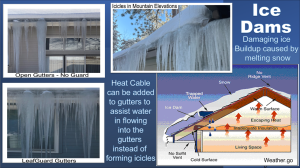
But here’s what matters more than the per-foot cost: what happens when gutters fail. A failed gutter system doesn’t just need replacement. It causes secondary damage. Foundation repairs from poor drainage average $4,000-$15,000. Ice dam damage to roof decking and interior ceilings runs $2,500-$8,000. One basement flood from gutter overflow can cost $3,000+ in water remediation and mold prevention.
The material choice — steel vs. aluminum — is less expensive than the consequences of choosing wrong.
Should I Replace My Steel Gutters With Aluminum?
If your steel gutters are showing any of these signs, replacement isn’t optional anymore:
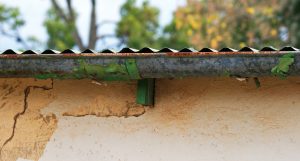
- Visible rust streaks on the exterior surface
- Sagging sections or gutters pulling away from the fascia
- Rust holes or pinhole leaks, especially near seams
- Water staining on foundation walls or basement water intrusion
- Sections that have already been patched or sealed
The answer to “should I replace my steel gutters with aluminum” depends on where you are in the failure timeline. If you’re seeing rust but no structural damage yet, you have time to plan the replacement properly. If you’re seeing water damage or basement seepage, you’re past the planning stage — you need a solution now.
Aluminum is the standard replacement material because it solves the corrosion problem. But standard aluminum gutters still have the same fundamental weakness as steel: they clog. And clogged gutters fail regardless of material. When water can’t flow, it overflows — onto your foundation, into your basement, under your siding.
That’s why homeowners who replace failing steel gutters increasingly skip standard aluminum and install a gutter guard system instead. The material upgrade (steel to aluminum) solves the rust problem. The design upgrade (open gutter to covered system) solves the clog problem.
Ready to Replace Your Steel Gutters, But Not Sure About the Next Steps?
Start with an honest assessment of your current system. Take a walk around your property and really look at your gutters. What you’re checking for:
- Rust perforation — holes rusted through from inside
- Debris accumulation — how much organic material is sitting in there holding moisture (you may be able to see your gutters from an upstairs window)
- Seam separation — gaps where sections originally connected
- Fascia board condition — look for rot or water staining where gutters attach. Bubbling and peeling paint is also a good clue.
If the fascia is rotted, you’ll need that repaired before new gutters go up. Most contractors include fascia inspection in their estimate, but it’s worth knowing what you’re looking at before they arrive.
Next, decide whether you want to keep cleaning gutters or eliminate that task permanently. Standard aluminum gutters still require cleaning 2-4 times per year in Colorado — spring cottonwood season, summer storm debris, fall pine needles, and sometimes a winter check before snowmelt. At $150-$300 per cleaning, that’s $300-$1,200 annually. Over a 30-year gutter lifespan, you’ll spend $9,000-$36,000 on maintenance alone.
Guards and covered systems cost more up front but can save money in the long run. Adding a cover will reduce the number of times the system will need to be cleaned (yes, gutter guards do need to be cleaned). Install a KGuard gutter system and you eliminate that recurring expense entirely. For homeowners who’ve spent decades climbing ladders to clean steel gutters, that calculation matters.
When You’re Ready to Move Forward:
- Schedule an inspection: Get a professional assessment of your current system’s condition, including fascia board integrity and drainage patterns around your foundation.
- Evaluate total cost of ownership: Compare the installed cost of standard aluminum gutters plus 30 years of cleaning against a maintenance-free system.
- Check your warranty coverage: If your steel gutters are relatively new (10-15 years), verify whether corrosion is covered before paying for replacement.
- Address existing water damage first: If your failing gutters have already caused foundation or basement issues, repair that damage as soon as possible.
- Consider Colorado-specific weather patterns: Make sure any new system can handle spring snowmelt volume and summer thunderstorm intensity — not just average rainfall.
The K-Guard Rocky Mountains Perspective
We install aluminum gutter systems exclusively, but not the kind you scoop leaves out of twice a year. Our patented hood design channels water in while keeping debris out — no mesh inserts, no clip-on guards and no maintenance. It’s engineered for Colorado’s snowmelt and storm seasons, with larger 6-inch capacity to handle high water volume. The system carries a lifetime transferable warranty, which matters if you’re evaluating long-term value and resale considerations. We’ve replaced hundreds of failed steel gutter systems all over Colorado. The homeowners we work with aren’t looking for the cheapest option — they’re looking for the last gutter system they’ll ever install.
K-Guard Rocky Mountains installs a permanent, zero maintenance gutter system built for Colorado homes. If you’re ready to make the switch, click here to schedule a free quote.