When 30-Year-Old Gutters Start Leaking Should You Repair or Replace?
You may have noticed the drips during the last storm. Maybe it’s water running down your siding instead of through the downspout. Or you’ve spotted rust stains on your fascia boards. After three decades, your gutters aren’t just aging — they’re failing. And the question isn’t whether to do something about it. It’s what option makes sense when you’re looking at a system that’s been on your house since the mid-1990s.
Here’s what most contractors won’t tell you upfront: patching 30-year-old gutters is almost always throwing good money after bad. The seams that are leaking today aren’t the only weak points. They’re just the first ones to go.
Why Old Gutters Leak After 30 Years
Standard sectional gutters — the kind installed on most Colorado homes in the 1990s — are assembled from 10-foot sections joined together with sealant and hardware. Every seam is a potential failure point. After three decades of freeze-thaw cycles, UV exposure, and thermal expansion, those seams break down. The aluminum itself may look fine, but the joints are compromised.
You’ll see this pattern: one leak gets patched, then another appears six months later. Then two more. It’s not bad luck. It’s physics. The system has reached the end of its functional lifespan, and individual repairs don’t solve the underlying problem.
In Colorado specifically, our weather accelerates this process. Spring snowmelt puts sustained volume through the system. Summer hailstorms dent and shift gutter sections. Fall brings leaves and pine needles that trap moisture against the metal. Winter ice dams force water back under roofing and into fascia boards. A gutter system that might last 35 years in Arizona is done at 30 here.
What Old Leaking Gutters Actually Cost You
The leak itself isn’t the problem — it’s what happens next. Water that doesn’t flow through your downspouts flows somewhere else. Usually against your foundation, into your soffit and fascia, or back under your roof edge.
Foundation repairs average $4,000 to $10,000 in the Denver metro area, depending on severity. Fascia board replacement runs $500 to $1,500 per side of the house. Interior water damage from ice dams — caused when clogged or leaking gutters let water back up under shingles — can exceed $5,000 once you factor in drywall, insulation, and paint.
And here’s the detail most homeowners miss: your homeowner’s insurance may not cover water damage caused by deferred maintenance. If an adjuster determines that leaking gutters were a known issue you didn’t address, your claim can be denied. Now you’re looking at out-of-pocket costs for what could have been prevented. Learn why water may be leaking into your basement by clicking here.
Your Five Options When Old Gutters Are Leaking
Option 1: Patch and Seal Individual Leaks
This is the cheapest option upfront — $100 to $800 depending on how many spots need attention. A handyman or gutter service will clean the area, apply sealant or patches, and call it done. It buys you time, maybe six months to two years. But on a 30-year-old system, you’re likely to see new leaks as soon as the next heavy rain or freeze cycle. You end up paying for multiple service calls, and the cumulative cost approaches what replacement would have cost in the first place.
This option makes sense only if you’re planning to sell within the next year and need the gutters functional enough to pass inspection. It’s a stopgap, not a solution.
Option 2: Replace Damaged Sections
If the leaks are concentrated in one area — say, a corner where two rooflines meet — you might replace just those sections rather than the whole system. Cost typically runs $400 to $1000 for a 20-foot section including labor. It’s a challenge matching 30-year-old gutter profiles and colors. Even if you find the same style, the new aluminum won’t match the weathered finish of your existing gutters. You’ll have a visible differences.
And you still have the same problem as patching: the rest of your system is the same age and will likely develop new issues within a year or two. You’ve delayed the inevitable, not solved it.
Option 3: Full Sectional Gutter Replacement
This is the straightforward option most contractors will quote. Remove your old gutters completely and install new sectional gutters — same style, newer materials. For an average 2,000-square-foot home in the Denver area, expect to pay $1,000 to $2,700 depending on gutter size, material quality, and how many corners and downspouts your roofline requires.
You get a clean start with new seams, new sealant, new hangers, and a system that should last another 20 to 25 years if maintained properly. The catch is that word: maintained. You’re still buying sectional gutters with seams that will eventually leak again. You’re still buying gutters that will clog with leaves and require cleaning 2-4 times per year at $150-$300 per visit. Over the next 20 years, you’ll spend another $6,000 to $12,000 just on cleaning, plus whatever repairs come up.
It’s a known quantity. You understand what you’re getting because it’s what you already have, just newer.
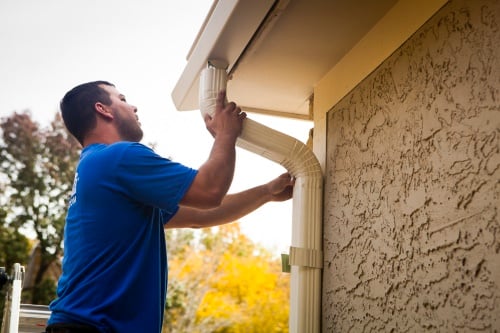
Option 4: Seamless Gutter Replacement
This is an upgrade to the previous option; remove your old gutters completely and install new seamless gutters. And this option on an average 2,000-square-foot home in the Denver area will run anywhere from $1,400 to $6,500 depending on materials and gutter size, number of corners and downspouts.
This is definitely the better option than seamless gutters. Less connection points mean less chances for failure. These gutters should last 25-30 years with regular maintenance. And it’s recommended that you clean your gutters at least 2 times a year in Colorado. More often if you have Cottonwoods or pine needles that drop on your roof.
There are a lot of variables that determine the price you pay for a gutter system. You can read more about the breakdown in pricing this blog and you can learn more about material options for gutters in this blog.
Option 5: Seamless Gutter Guard System
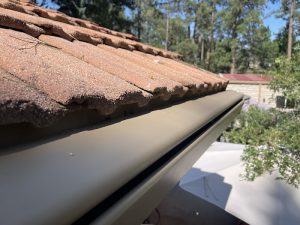
This is where you step off the maintenance treadmill entirely. A seamless gutter system is fabricated on-site to the exact dimensions of your roofline. No seams except at corners and downspouts. Add a gutter guard system that keeps debris out, and you eliminate both leak points and clogs.
K-Guard’s system takes this further with a patented hood design that channels water in while keeping everything else out. No covers that need to be cleaned, zero yearly maintenance. The gutters are oversized, the equivalent of 6″ K-style, to handle Colorado’s heavy spring runoff and summer cloudbursts. And it’s backed by a lifetime transferable warranty, which matters for as long as you own the home and if you’re thinking about resale value.
Cost for a full K-Guard installation is determined by the size and roofline complexity of your home. It will likely cost more than seamless gutter replacement. But here’s the math that matters: you’re eliminating 20+ years of gutter cleaning costs, eliminating future leak repairs, and protecting your foundation from water damage that could cost five times the gutter investment to fix.
For homeowners who’ve owned their house for 25+ years and plan to stay, this is the option that that checks all the boxes. You’re done. No more ladder, no more cleaning, no more service calls, no more wondering whether this is the storm that finally overflows and floods your window well.
How to Decide Which Option Makes the Most Sense for Your Home
Start by asking yourself two questions: How long do you plan to stay in this house? And how much of your time and attention do you want to spend on gutter maintenance going forward?
If you’re selling within 12 months, patching or sectional replacement gets you through closing. If you’re staying 3-5 years, sectional replacement is the safe middle ground. If you’re staying 10+ years — or if you’re simply tired of dealing with gutters every spring and fall — a seamless guard system is the investment that pays for itself in time and avoided repair costs.
Also consider your roof age. If your shingles are 20+ years old and you’re planning a roof replacement in the next few years, coordinate the gutter work. Many homeowners replace gutters at the same time they reroof, since the fascia boards are already exposed and it’s easier to ensure proper integration between the roof edge and gutter system.
In most Colorado municipalities new drip edge is required by code, when installing a new roof. Oftentimes this means your gutters will need to be removed before a new roof can be installed. If you are considering new gutters, replacement during a reroof is ideal. We have an article about the 5 Signs You Need a New Roof, if you want to explore this more.
Next Steps for Homeowners with Leaking Gutters
- Document the current leak locations with photos. You’ll want this if you’re getting multiple quotes or filing an insurance claim.
- Check your fascia boards behind the leaks for rot or water staining. If the wood is soft, you’ll need fascia replacement before any gutter work.
- Get at least two quotes for replacement, and make sure both quotes specify gutter size (5″ vs 6″), material type, material gauge, and warranty terms.
- Ask contractors specifically about their approach to Colorado’s freeze-thaw cycles and heavy snow loads. Anyone who gives a generic answer probably isn’t thinking about your climate.
- If you’re considering a gutter guard system, ask to see a home in your area where it’s been installed for at least 5 years. You want to see how it actually performs, not just what the brochure promises.
The K-Guard Rocky Mountains Perspective
We’ve worked on hundreds of homes where old gutters were patched multiple times before the homeowner finally called us. The pattern is always the same: each repair bought a few months, and the cumulative cost approached what a permanent solution would have cost at the start. Our view is straightforward: if your gutters have reached the point where multiple sections are leaking, you’re past the repair window. You’re choosing between replacement options. Then the question becomes whether you want to buy the same system again or invest in something that eliminates all underlying problems. K-Guard’s seamless design and lifetime warranty are built for homeowners who want to solve this once and move on.
K-Guard Rocky Mountains installs a permanent, maintenance-free gutter system built for Colorado homes. If you’re ready to stop patching leaks and climbing ladders, schedule a free quote with our team. We’ll assess your current system, explain exactly what’s failing and why, and give you a transparent quote with no pressure and no surprises.