Why Fascia Rot and Sagging Gutters Happen Together
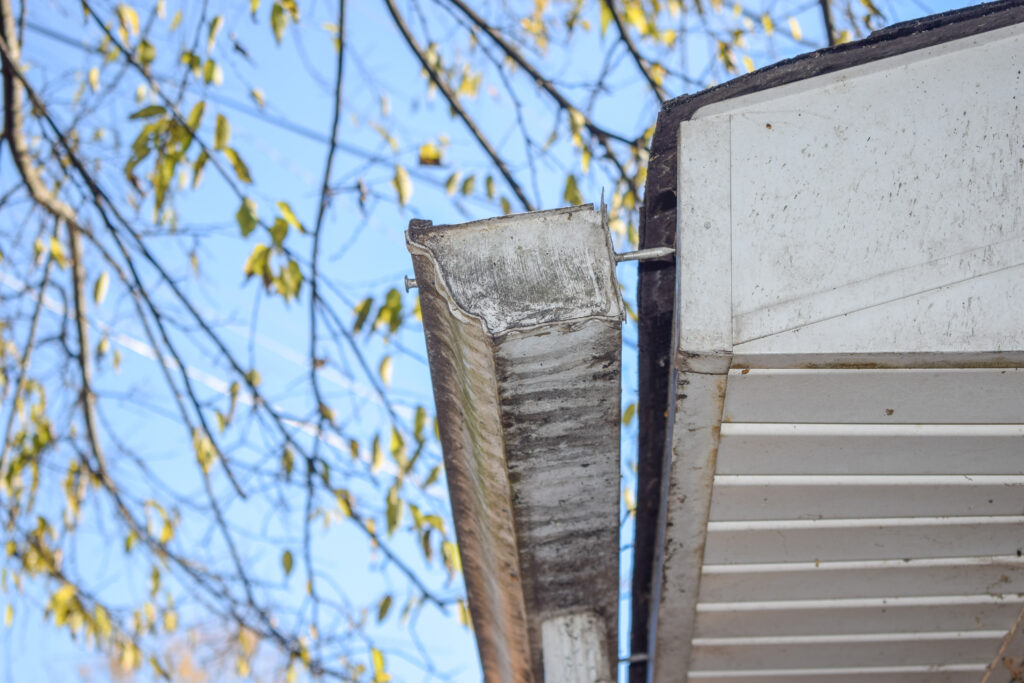
If you’re looking up at your roofline and seeing gutters that are pulling away from the house, there’s a good chance the fascia board behind them is rotting. These two problems don’t just happen to show up at the same time by coincidence — one causes the other. Your gutters are attached to the fascia, and when that wood starts to rot, it can no longer hold the weight. The screws pull loose, the gutter sags, and water starts running behind the system instead of through it.
Most homeowners discover this problem the same way: they notice a gap between the gutter and the roofline, or they see water spilling over the back of the gutter during a rainstorm. By the time it’s visible from the ground, the damage is already significant.
What Causes Fascia to Rot in the First Place
Fascia boards rot because they’re exposed to moisture over time. In Colorado, that moisture comes from a few predictable sources. The first is overflow. When gutters clog with leaves, pine needles, or cottonwood debris, water backs up and sits against the fascia instead of draining away. The second is ice dams — a common issue during our freeze-thaw cycles in late winter and early spring. When snowmelt refreezes at the roof edge, it creates a dam that forces water under the shingles and behind the gutter system.
The third cause is less obvious: poor gutter installation. If your gutters don’t have the right slope, or if they’re undersized for Colorado’s heavy spring storms, they’ll hold standing water. That water finds its way into every seam, every screw hole, and eventually into the wood itself. Once fascia gets wet repeatedly, rot is inevitable.
Here’s what makes this especially frustrating for homeowners who’ve owned their homes for decades: fascia boards on homes built in the late 1970s and early 1980s were often made from softwood like pine or fir. These materials were cheaper and easier to work with, but they don’t hold up to moisture the way modern composite or treated lumber does. If your home is 40+ years old and you’ve never replaced the fascia, you’re likely looking at wood that’s been absorbing water for longer than most people keep a car.
The Real Cost of Ignoring This Problem
Rotting fascia and sagging gutters aren’t just cosmetic issues. When gutters pull away from the house, they stop doing their job. Water that should be channeled away from your foundation starts pouring down the side of your home instead. In Colorado’s clay-heavy soil, that means foundation movement, cracking, and basement water intrusion. Foundation repairs in the Denver metro area typically run between $4,000 and $10,000, and that’s for relatively minor stabilization work. Severe foundation damage will cost far more.
There’s also the issue of what happens inside the wall. Once water gets behind the gutter and into the fascia, it doesn’t stop there. It wicks into the soffit, the roof decking, and eventually the attic framing. By the time you see water stains on your interior ceiling, you’re looking at mold remediation, insulation replacement, and structural repairs that can easily exceed $15,000.
And if you’re thinking about selling your home in the next few years, sagging gutters and visible fascia damage are red flags for buyers. A home inspector will call it out immediately, and buyers will either walk away or demand a credit that’s larger than the actual repair cost. Curb appeal matters, and gutters that are visibly failing tell potential buyers that deferred maintenance is a pattern.
How to Fix Fascia Rot and Prevent It from Coming Back
The first step is addressing the damage that’s already there. You can’t just reattach sagging gutters to rotted wood — the screws won’t hold, and you’ll be right back where you started within a few months. The fascia board needs to be replaced. This means removing the existing gutter, cutting out the rotted section of fascia, and installing new lumber that’s properly treated for exterior use. If the rot has spread to the soffit or roof decking, those sections need to be replaced as well.
Once the structure is sound, you need to address the root cause: water management. Standard sectional gutters with seams, and open tops are the primary reason fascia rots in the first place. They clog, they overflow, and they eventually leak at every connection point. Cleaning them twice a year helps, but it doesn’t solve the underlying problem — debris still gets in, and water still finds its way behind the system during heavy storms.
This is where most homeowners make one of two mistakes. The first is installing gutter guards or mesh inserts over their existing gutters. These products reduce the amount of large debris that gets in, but they don’t stop pine needles, roof grit, or cottonwood seeds. They also create a false sense of security — homeowners assume the gutters are protected, so they stop inspecting them. By the time they realize the system is clogged, the fascia is already compromised.
The second mistake is replacing rotted fascia and then reinstalling the same gutters that caused the problem. You’ve fixed the symptom, but not the cause. Within three to five years, you’ll be looking at the same issue again.
Next Steps for Protecting Your Fascia Long-Term
- Inspect your fascia and gutters from ground level twice a year — once in late spring after cottonwood season, and once in late fall after the leaves drop. Look for gaps between the gutter and the roofline, sagging sections, or visible water stains on the fascia.
- Replace any rotted fascia before reattaching gutters. You cannot fix sagging gutters by tightening screws into soft wood. The repair won’t hold.
- Consider upgrading to a gutter system that eliminates debris entry entirely. Mesh guards and inserts reduce clogs, but they don’t prevent them. A hooded gutter system keeps debris out while channeling water in, eliminating the overflow that causes fascia rot. Click into this article and learn more about how the wrong guard can make issues worse.
- Make sure your new gutters are properly sized for Colorado storms. Builder-grade gutters are often 4-inch K-style, which can’t handle the volume of water that comes off a roof during a spring downpour or rapid snowmelt. Upgrading to a 5-inch or 6-inch system increases capacity and reduces the risk of overflow. Click here to learn more about why size is so important.
- Confirm that your gutter system includes a lifetime warranty. If you’re investing in fascia replacement and new gutters, make sure the system is built to last. A transferable warranty also protects your home’s resale value. Learn about KGuard’s warranty by clicking this link.
The K-Guard Rocky Mountains Perspective
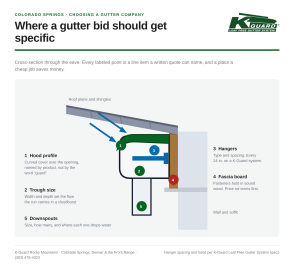
We see rotted fascia on about 40% of the homes we evaluate for gutter replacement. It’s not a surprise — Colorado’s weather is hard on wood, and traditional gutters expose fascia boards to constant moisture. K-Guard’s hooded system addresses this at the source. The patented design keeps debris out, so there’s no clogging, no overflow, and no water sitting against the fascia. The trough is larger than other gutters and we install with heavy-duty hangers spaced every two feet, which distributes the load evenly and prevents sagging even under snow and ice. If your fascia needs replacement, we handle that during installation — so you’re not left coordinating between a carpenter and a gutter company.
Ready to Stop the Cycle?
K-Guard Rocky Mountains installs a permanent, maintenance-free gutter system built for Colorado homes. Tough enough to withstand Colorado weather. If you’re ready to stop the repair cycle on your gutters, schedule a free quote with our team.
Related Articles
If you want to go deeper on this topic, we recommend the following articles:
- How to Inspect Your Gutters for Damage Before It Costs You Thousands
- What Happens to Your Foundation When Gutters Fail
- Why Gutter Guards Don’t Work the Way You Think They Do