Gutter Company in Colorado Springs: How to Check One Out Before You Sign
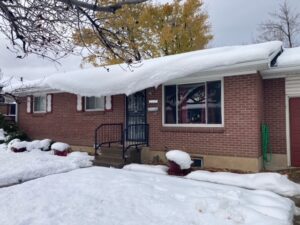
Picking a gutter company in Colorado Springs is harder than it looks. Every quote says “seamless aluminum,” and every crew says they do good work. The difference is obvious two winters later. One house still has gutters tight to the fascia after a wet April snow, and the next one down the street has a sagging run and a stained soffit.
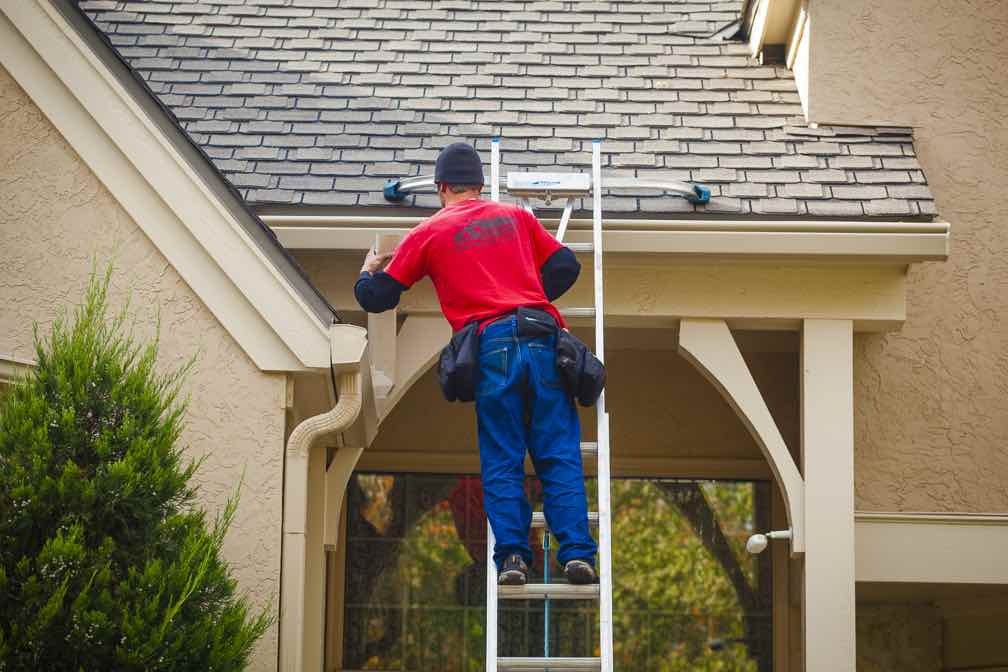
Most of that you can sort out before you sign anything. Fifteen minutes online covers the license and insurance side, and a couple of questions at the kitchen table will tell you whether the person quoting your house actually measured it or just eyeballed the place from the driveway.
What a gutter company in Colorado Springs has to prove before it touches your home
Colorado has no statewide contractor license. State law lets counties and cities run their own licensing programs instead (C.R.S. 30-11-125). So the word “licensed” means something different in Pueblo than it does in El Paso County.
Here, licensing runs through the Pikes Peak Regional Building Department. PPRBD covers the city plus El Paso County, Fountain, Monument, Manitou Springs, Woodland Park, Palmer Lake, Green Mountain Falls, and Calhan. Its rule is short: a company must hold a PPRBD license before it consults for, contracts for, or performs work that needs a permit.
Replacing gutters on an existing home often falls outside permit rules, so plenty of gutter companies do not carry a PPRBD license. A missing license is not proof of a bad company on its own. Two minutes on the PPRBD contractor search still tells you what a business holds and whether the record is active. If your job touches framing, like rotted fascia board or a reworked soffit, call the PPRBD permit counter at 719-327-2883 first. Ask before the crew starts, not after.
The paperwork worth asking for
Ask for these by email. Then you have the answer in writing instead of in your memory of a driveway conversation.
| What to ask for | Where you verify it | Why it protects you |
|---|---|---|
| Certificate of general liability insurance, naming your address | The insurer or agent on the certificate, not the company | Ladder work over your roof, siding, and landscaping is the real risk |
| Proof of workers’ compensation coverage | Colorado Department of Labor and Employment rules require it for any employer with one or more employees in Colorado | An injured uninsured worker on your property becomes your problem |
| Registered business name and standing | Colorado Secretary of State business search | Warranties follow companies that still exist, so a name that first appeared last spring is worth a question |
| Active license or registration record, if the work needs a permit | PPRBD contractor search | Unlicensed permit work becomes your problem at resale |
A company that sends all four documents in the same day tells you something useful about how it runs jobs.
Your elevation and your roof decide what the bid should specify
Front Range weather is why the spec on the page matters. Homes in the Pikes Peak region get designed to numbers PPRBD publishes, and those numbers describe what your eave lives through.
| Design condition | Value used in the Pikes Peak region | Source |
|---|---|---|
| Ground snow load, grade plane below 7,000 ft | 43 psf uniform | PPRBD 2026 design criteria |
| Ground snow load, grade plane at or above 7,000 ft | 57 psf uniform | PPRBD 2026 design criteria |
| Flat roof snow load, below 7,000 ft | 30 psf uniform | PPRBD 2026 design criteria |
| Basic wind speed, ordinary homes (Category I/II) | 130 mph, ultimate | PPRBD 2026 design criteria |
| Wind exposure category | Exposure C, open terrain | PPRBD 2026 design criteria |
| Rainfall intensity, 5-minute duration, 2-year event | 3.38 in/hr | NOAA Atlas 14, Colorado Springs point estimate |
Elevation changes the snow number inside one metro area, and plenty of neighborhoods west and north of town sit near that 7,000-foot line. Wind pulls the other way. It gets under the outer lip of a gutter and lifts. A gutter held up every couple of feet and screwed into solid wood takes that, while one hanging on a few nails in soft fascia board does not.
Then there’s the rain, which around here arrives all at once instead of drizzling for an afternoon. When a storm hits that 2-year rate, water reaches the gutter faster than a narrow trough and a small outlet can carry it away, and the overflow goes straight down the wall. Capacity is worth raising while you’re still talking numbers, and this breakdown of gutter sizing for Colorado homes walks through the math.
Questions that separate a measured quote from a guess
Good answers come fast and get specific, because the person quoting has already looked at your roofline.
- How many linear feet are you quoting, and how did you get that number? A number from a walk-around with a measuring wheel or a roof plan beats a windshield guess.
- What trough and downspout sizes are you installing, and why those on my house? The answer should name your roof area and the number of downspouts on each run.
- How is the gutter held up, and how far apart? Spacing and fasteners matter more than the metal. Hangers screwed into sound fascia hold, and spikes driven into soft wood pull loose.
- What happens if you open up the fascia and find rot? Get the change-order steps, and how they get priced, before the tear-off.
- Who is on my roof, employees or a hired crew? Both can do fine work, but the insurance and warranty answers differ, so ask which applies.
- What does the warranty cover, who honors it, and does it transfer when you sell? Ask for the document, not a summary.
Pressure to sign that day is its own answer. Ask for the full scope on paper and wait until you have it in hand.
What the written scope should name
A quote worth comparing names materials, sizes, and counts. That means gutter profile and metal thickness, hood or guard details, trough and downspout size, hanger type and spacing, how many downspouts and where each one lands, fascia repair terms, color, cleanup and haul-away, and the schedule.
Two quotes for the same house can sit far apart on price and describe different products. The spec list matters more than the total. If one bid names 0.032-inch aluminum with hangers every 24 inches and the other names nothing, you are comparing paperwork rather than prices.
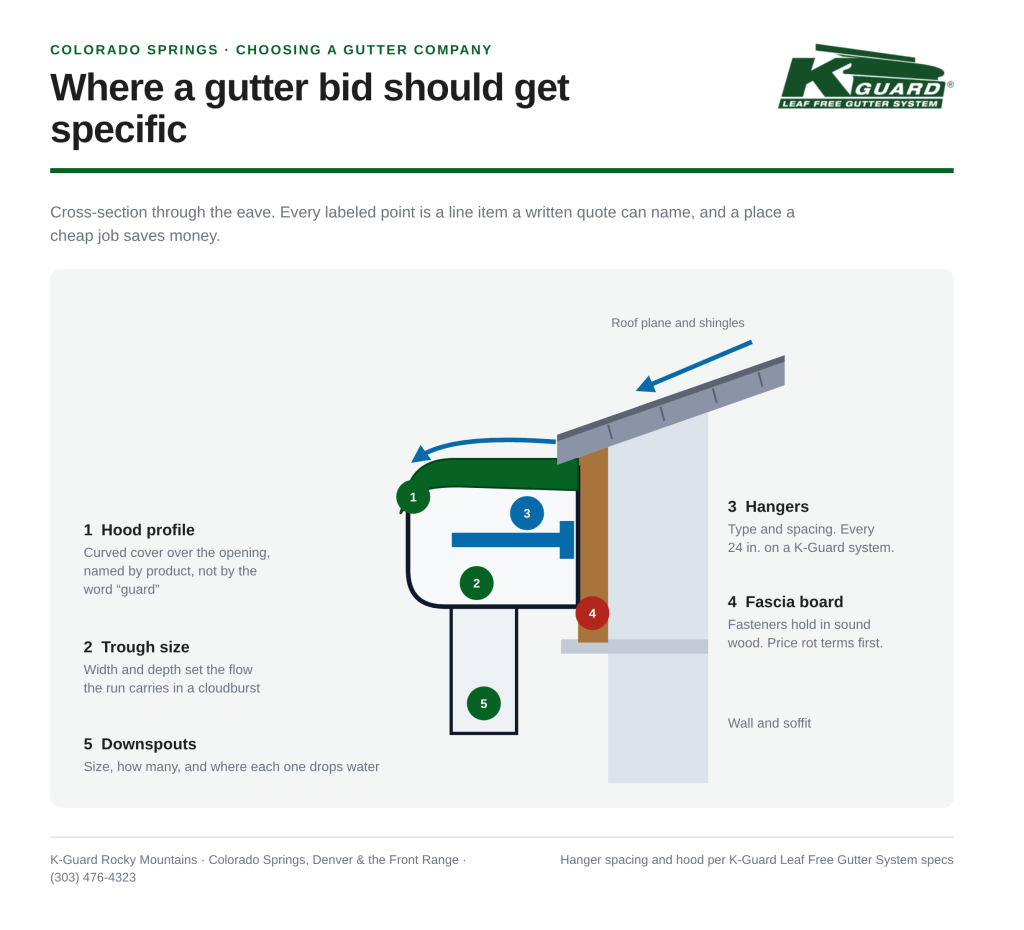
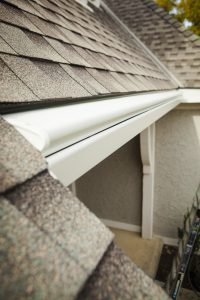
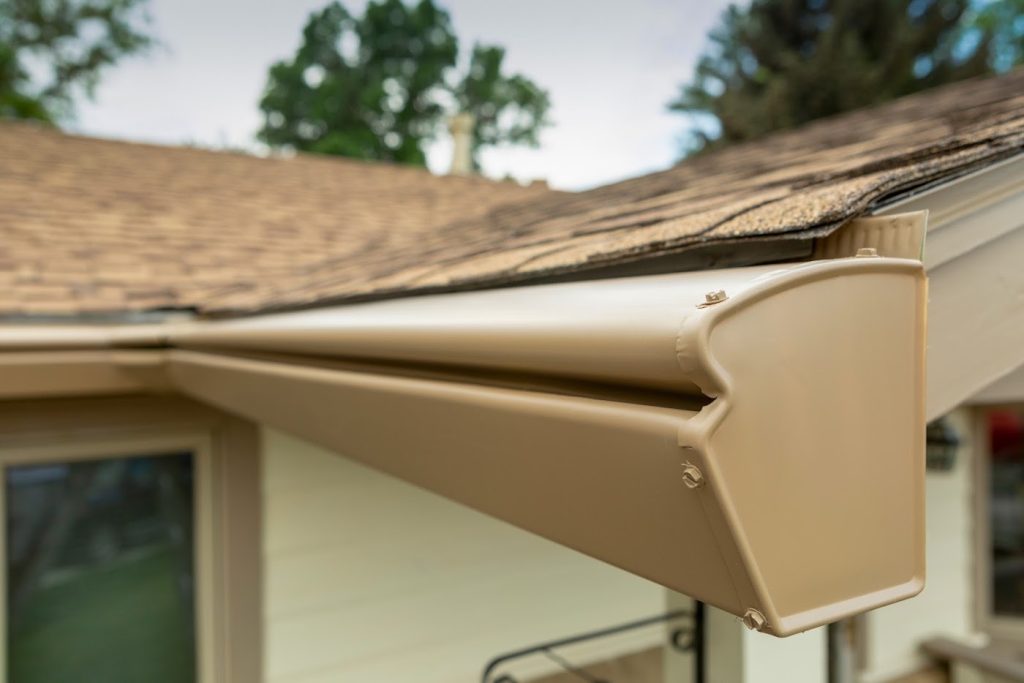
K-Guard Rocky Mountains installs the K-Guard Leaf Free Gutter System across Colorado Springs, Denver, and the Front Range. The system pairs a curved hood with a seamless heavy-duty aluminum trough. Patented all-weather polymer hangers sit every 24 inches, and the troughs and downspouts run about 40% larger than typical guards. It comes in 37 colors, and the lifetime clog-free warranty and paint warranty can be transferred once to the next homeowner with written notice. The Colorado Springs service page lists the coverage area, and a measured quote for your address starts at the request pricing page or at (303) 476-4323.
FAQ
Do I need a permit to replace gutters in Colorado Springs? A straight gutter swap on an existing home usually does not, though permit rules follow the scope and the jurisdiction. PPRBD requires a license for any work that needs a permit. Call the permit counter at 719-327-2883 to confirm what your job needs.
Does Colorado issue a state gutter license? No. Colorado handles contractor licensing locally rather than at the state level, under C.R.S. 30-11-125. Near Colorado Springs, that authority is the Pikes Peak Regional Building Department.
How do I verify that a gutter company is licensed with PPRBD? Use the PPRBD contractor search at pprbd.org/Search/Contractor. Look up the business name, then check the license type and the current status.
Does a gutter company in Colorado Springs need workers’ compensation insurance? If it has one or more employees in Colorado, yes. State rules require workers’ compensation coverage for employers. Ask for a certificate rather than a verbal answer.
What should a gutter quote include besides the price? Linear footage, trough and downspout sizes, downspout locations, hanger type and spacing, metal thickness, color, fascia repair terms, cleanup, schedule, and the written warranty with its transfer terms.
Why does elevation change what my gutters have to handle? Design snow loads step up with elevation here, from 43 psf below 7,000 feet to 57 psf at or above it. Two homes 20 minutes apart are not facing the same winter.