Most Homeowners Miss The Warning Signs Until It’s Too Late
You’ve owned your home long enough to know when something’s off. The garage door sounds different. The furnace cycles longer than it used to. You notice these things because you pay attention. But gutters? They fail quietly. By the time you see water sheeting off the roof during a storm, the damage has already started. It’s happening where you can’t see it, making it difficult to see the signs that your gutters are failing.
Most Denver-area homes have gutters that were installed when the house was built. If your home went up in the late 1970s or early 1980s, those gutters are forty-five years old. Even quality aluminum gutters weren’t designed to last that long, especially not through Colorado’s freeze-thaw cycles, hailstorms, and the seasonal debris load from cottonwoods and pines.
What Damage Does Gutter Failure Actually Cause
When gutters fail, they don’t just overflow. They stop doing their primary job; directing water away from your foundation. That water has to go somewhere. It pools against your foundation walls, saturates the soil around your basement and erodes the grading you paid to have done decades ago.
Foundation repairs in the Denver metro area start at $4,000 and routinely exceed $10,000 when waterproofing and drainage correction are factored in. Basement water intrusion often requires mold remediation, which adds another $2,000 to $6,000. These aren’t theoretical costs. They’re what happens when failing gutters go unaddressed for two or three seasons.
The frustrating part? Most of this damage is preventable if you catch the warning signs early. The problem is knowing what to look for.
Overflow During Rain — The Most Obvious Sign
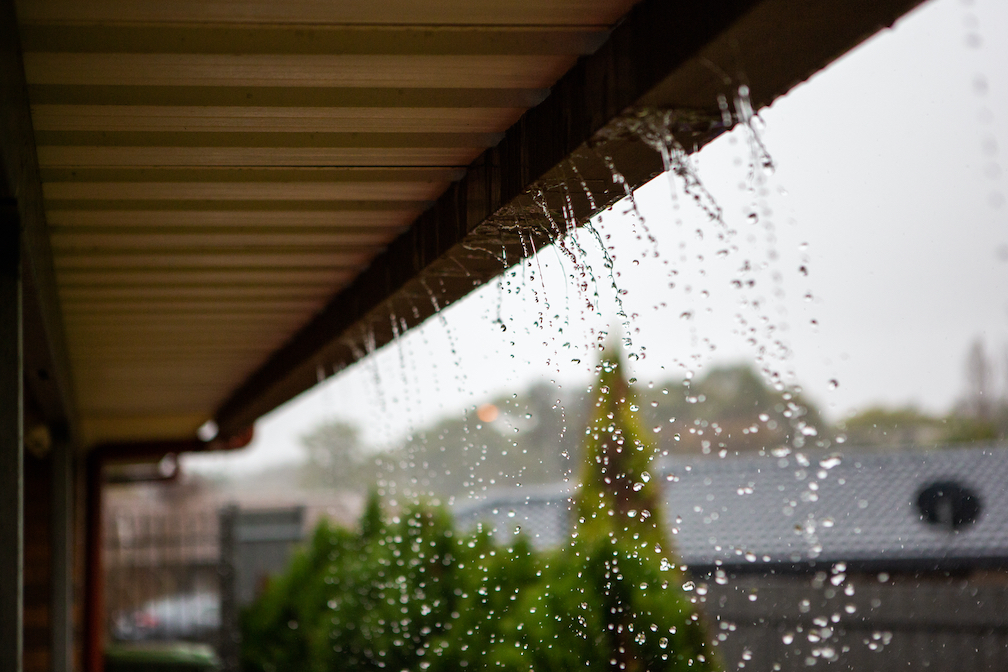
If you see water pouring over the front edge of your gutters during a rainstorm, that’s not normal. It means one of three things: the gutters are clogged, they’re undersized for Colorado’s storm intensity, or they’ve sagged enough that water can’t flow toward the downspouts.
Builder-grade gutters installed in the 1970s and 1980s are typically 4-inch K-style gutters. They are adequate for light rain, but Colorado’s spring thunderstorms and snowmelt events produce water volumes that overwhelm these smaller systems. When water can’t move through the gutter fast enough, it spills over the edge, right next to your foundation.
Pay attention during the next hard rain. Walk your roofline. If you see consistent overflow in the same spots, your gutters aren’t managing the load.
Sagging or Pulling Away From the Fascia
Your gutters are held to your fascia board by hangers or spikes. Over time — especially when gutters fill with wet leaves and pine needles — the weight pulls the gutter away from the house. You’ll see a visible gap between the back of the gutter and the fascia, or sections that dip lower than others.
This isn’t just an aesthetic problem. When gutters pull away, water runs behind them and soaks the fascia board. Wood fascia rots. That rot spreads to the roof decking. What starts as a gutter issue becomes a carpentry project that costs thousands.
Walk around your home and look up. If any section of gutter is visibly lower than the rest or if you can see daylight between the gutter and the house, that’s a clear sign of structural failure.
Peeling Paint or Rust Stains on Your Siding
Water leaves evidence. If you see vertical rust stains running down your siding below the roofline, water is escaping from your gutters — either through seams, cracks, or overflow. Peeling paint in the same areas tells you the same thing: prolonged moisture exposure.
This is common on homes with older gutters that were joined at corners or downspout outlets. Those seams degrade over time, especially after years of freeze-thaw cycles. Even small leaks deposit enough water to stain siding and promote wood rot behind it.
Check the corners of your home first — that’s where gutter seams typically fail. If you see rust trails or paint blistering, the gutter system is compromised.
Water Pooling Near Your Foundation
After a rainstorm, walk the perimeter of your house. If you see standing water within three feet of your foundation, your gutters aren’t doing their job. Either the downspouts are dumping water too close to the house, or overflow is landing directly at the foundation line.
This is the warning sign that leads directly to the expensive problems: foundation settling, basement leaks, and soil erosion. Colorado clay soil expands when wet and contracts when dry. That cycle puts lateral pressure on foundation walls. Over time, you get cracks. Once water finds a crack, it gets worse every season.
Your home’s grading was designed to move water away from the foundation, but only if the gutters deliver water to the right spots. When gutters fail, the grading can’t compensate.
Cracks in Your Basement Walls
Horizontal or stair-step cracks in your basement walls are a late-stage indicator that water pressure is acting on your foundation. While not every crack is caused by gutters, failing gutters are one of the most common contributing factors in the Denver area.
If you’re seeing new cracks or existing cracks that are widening, ask yourself: where is the water going during storms? If your gutters are overflowing or if downspouts terminate within a few feet of the foundation, that’s likely your answer.
Foundation engineers will tell you to fix the water source before repairing the cracks. That means fixing the gutters first. Otherwise, you’re paying for foundation work that will fail again in three years.
Landscape Erosion Below the Roofline
If you see trenches or eroded soil directly below your roofline — especially in mulch beds or along the sides of your house — that’s overflow impact. Gutters are supposed to collect roof runoff and route it through downspouts. When they don’t, thousands of gallons of water per storm pour off the roof edge and carve channels in your landscaping.
This is more than cosmetic. Erosion undermines the soil stability around your foundation. It exposes foundation walls to more moisture. And it redirects water toward your basement.
Check your landscaping after the next heavy rain. If you see trenches or washed-out mulch, your gutters are failing.
How Long Standard Gutters Actually Last
The industry estimate for aluminum gutters is fifteen to twenty years — but that assumes regular maintenance, professional installation, and moderate weather conditions. Colorado doesn’t offer moderate weather conditions. We have hailstorms that dent gutters, freeze-thaw cycles that crack seams, and debris loads from cottonwoods and pines that most gutter systems weren’t designed to handle.
If your gutters are original to a home built in the 1970s or 1980s, they’re decades past their serviceable life. Even if they’re still attached to your house, they’re not protecting it the way they should.
The question isn’t whether they’ll fail. It’s whether you’ll replace them before they cause foundation damage or after.
Next Steps for Identifying Gutter Failure
- Complete a visual inspection during the next rainstorm: look for overflow, leaks at seams, and water pooling near your foundation.
- Walk your roofline and check for sagging sections, gaps between the gutter and fascia, or visible rust stains on siding.
- Examine your basement walls for new cracks or widening in existing cracks.
- Review your landscaping for erosion patterns below the roofline: trenches and washed-out mulch are clear indicators.
- If your gutters are more than twenty years old, assume they’re near the end of their functional life and plan accordingly.
The K-Guard Rocky Mountain Perspective
We’ve replaced gutters on hundreds of Denver-area homes built in the 1970s and 1980s. The most common thing we hear? “I had no idea it was this bad.” Gutters fail gradually, and homeowners don’t see the damage until it’s already in the foundation. K-Guard’s patented hooded system eliminates the debris clogs and overflow points that cause most of these failures — and it’s engineered to handle Colorado’s weather extremes without the maintenance cycle required by traditional gutters. It’s not a repair. It’s a permanent solution.
K-Guard Rocky Mountain installs a permanent, maintenance-free gutter system built for Colorado homes. If you’re ready to stop climbing that ladder, schedule a free estimate with our team.
Related Articles
If you want to go deeper on this topic, we recommend the following articles: