
When Clean Gutters Still Overflow: The Capacity Problem
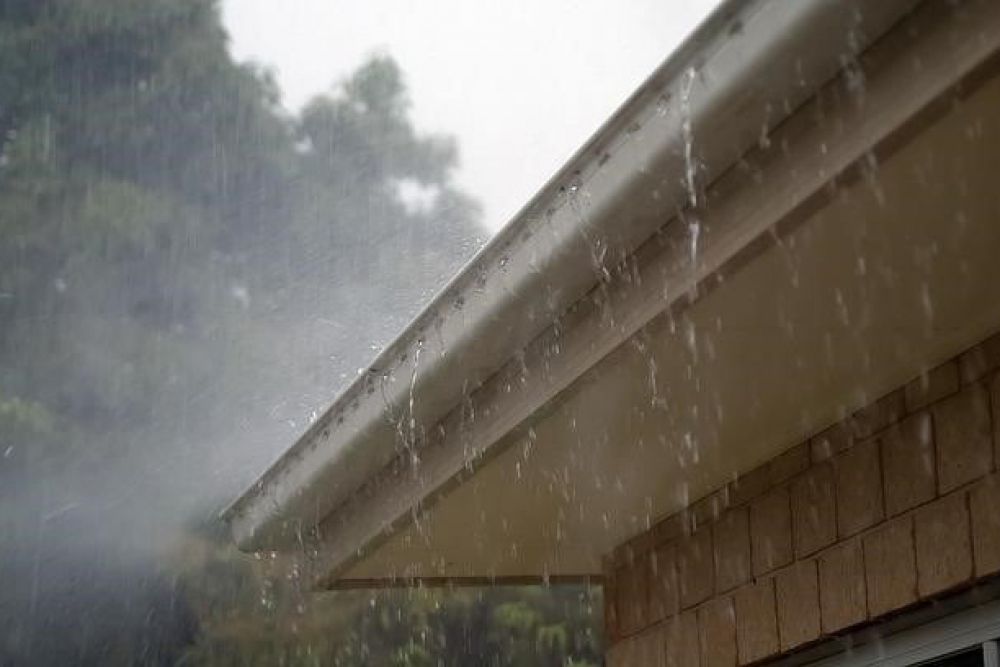
You keep your gutters clean. You don’t have trees dropping debris on your roof. Yet when a spring thunderstorm rolls through or a June cloudburst hits your home, you watch water pour over the front of your gutters like a waterfall. The problem isn’t what’s in your gutters. It’s the gutters themselves.
Most homes built in Colorado between 1975 and 2005 came with standard 4-inch gutters. That was fine for the builder’s checklist, but it wasn’t designed for the intense, short-duration storms that Colorado delivers. When half an inch of rain falls in fifteen minutes — a common pattern during our May and June storm season — those undersized gutters simply can’t keep up.
Why Gutter Capacity Matters More Than You Think
When gutters overflow, the water doesn’t just disappear. It falls directly against your foundation, saturating the soil within inches of your basement walls. Over time, that repeated saturation leads to hydrostatic pressure — water pushing against your foundation from the outside. The result: cracks, seepage, and interior water damage that costs an average of $4,000 to $10,000 to repair.
The second consequence shows up at your roofline. Overflowing water backs up under your shingles, rotting the fascia boards and damaging the roof decking. You’ll see it as peeling paint on your fascia, water stains on your soffits, or — in severe cases — interior ceiling stains near exterior walls.
The frustrating part for homeowners like you is that you’re doing everything right. You’re not ignoring maintenance. Your gutters are clean. The system is just too small for the job.
What Size Gutters Can Actually Handle Colorado Storms
5″ K-Style residential gutters handle about 1.2 gallons of water per foot. During a heavy Colorado thunderstorm dropping one inch of rain per hour, a typical 1,500-square-foot roof section sheds approximately 935 gallons of water per hour. That volume has to move through your gutters and downspouts without backing up.
A 5-inch gutter increases capacity by roughly 50% compared to the standard 4-inch system still found on most homes. A 6-inch gutter can handle nearly double the volume of the 5″ gutter. The difference becomes critical during those fifteen-minute downpours where rainfall intensity spikes to two or three inches per hour — rare, but not unusual in our Front Range weather pattern.
But gutter size alone doesn’t solve the problem. The shape of the gutter matters. A K-style profile channels water more efficiently than older half-round designs. And the pitch — the angle at which your gutters slope toward the downspouts — determines how quickly water moves through the system rather than pooling and overflowing. Not sure why overflowing water is an issue? Read this blog next.
Downspouts: The Bottleneck Most Contractors Ignore
You can install the largest gutters available, but if your downspouts can’t handle the flow, you’ll still see overflow. Most homes have 2×3-inch rectangular downspouts. That’s adequate for normal rainfall, but it becomes a bottleneck during heavy storms.
Downspout size matters! Upgrading to 3×4-inch downspouts nearly doubles your drainage capacity. Equally important is downspout placement. Your gutters need a downspout roughly every 30 to 40 feet of gutter run. Longer runs create a backup effect where water can’t reach the downspout fast enough during peak flow.
The final piece: make sure your downspouts discharge at least four to six feet away from your foundation. Extensions, underground drains, or pop-up emitters all work — but the water has to move away from the house, not just dump at the foundation line. Click here to take a deep dive into the importance of gutter capacity.
What to Look For When Evaluating Gutter Systems
Here’s what to look for in a gutter system that will handle Colorado weather for the next twenty years:
Gutter width and depth: Look for 5-inch or 6-inch K-style gutters, not the 4-inch builder-grade option. The extra inch makes the difference between managing a storm and watching water pour over the edge.
Material thickness: Aluminum gutters should be at least .027 or .032 inches thick. Thinner material flexes and sags over time, creating low spots where water pools instead of draining.
Seamless construction: Every seam is a potential failure point. It’s where leaks form first and a place for debris to snag, leading to a damming effect in the trough. Seamless gutters, formed on-site to the exact length of each roof section, eliminate most failure points.
Hanger spacing: Gutters need support every 24 inches. Some installers place brackets at intervals of ‘what ever feels right at that time’. We’ve experienced 30-foot runs of gutter that have 3 brackets total. Closer hanger spacing prevents sagging and maintains proper pitch over time.
Integration with roofline: The back edge of your gutter should sit just below your roof’s drip edge, catching water as it runs off the shingles. Gutters installed too low miss water during heavy rain; gutters too high create a gap where water shoots past.
The Installation Details That Determine Long-Term Performance
Even a well-designed gutter system fails if it’s installed poorly. The pitch has to be precise — typically one-quarter inch of slope for every ten feet of gutter run. Too little pitch and water pools. Too much and the system looks crooked and still doesn’t drain properly.
Your installer should assess your roof pitch, calculate your home’s square footage of drainage area, and size both gutters and downspouts accordingly. A 2,000-square-foot roof section requires more capacity than a 1,200-square-foot section, even if both runs are the same length.
Ask about fascia board condition before installation begins. If your existing fascia is rotted from years of overflow, it needs replacement before new gutters go up. Mounting new gutters to damaged wood guarantees failure within a few years.
Next Steps for Upgrading Your Gutter Capacity
- Measure your current gutters. This article helps explain how to measure, to determine the size of your current gutters. If your gutters are under 5″, you have undersized gutters for Colorado’s heavy rainfall.
- Count your downspouts. Divide your total gutter footage by the number of downspouts. If you get a number higher than 35-40 feet per downspout, you need more drainage points.
- Watch your gutters during the next heavy rain. Look for overflow, especially at corners and on long straight runs. That tells you exactly where capacity is failing.
- Get quotes from contractors who discuss capacity, not just price. A quality installer will ask about current drainage issues you have noticed, but also consider your roof size, evaluate pitch, as well as the current number of downspouts in order to recommend specific sizing based on your home’s drainage needs.
- Consider a system warranty that covers overflow and water damage. If a contractor stands behind their capacity calculations, they’ll warranty the performance, not just the materials.
The K-Guard Rocky Mountains Perspective
We designed our gutter system for both capacity and protection. Our 6-inch capacity gutters handle the volume Colorado storms deliver, and the patented hood system means you’ll never worry about clogs reducing that capacity. We only use .032 aluminum to stand up to added snow weight in the winter. Those specs paired with exclusive use of K-Guard Certified installers means you get gutters that actually work when it rains hard. It’s sized right, pitched right, and backed by a lifetime warranty that covers both materials and performance. Read this blog to learn more about what makes K-Guard gutters so unique.
K-Guard Rocky Mountain installs a permanent, maintenance-free gutter system built for Colorado homes. If you’re ready to stop watching water pour over your gutters every time it storms, schedule a free quote with our team.