

When Water Takes the Path of Least Resistance Through Your Flowerbed
You’ve spent years cultivating those hostas along your foundation. You mulch every spring, trim the shrubs, edge the beds. Then one good storm hits, and you watch a waterfall pour off your roofline directly into the pachysandra. By morning, there’s a trench carved through the mulch bed and half your plants are sitting in standing water.
This isn’t a drainage problem. It’s a gutter problem that’s destroying your landscaping one storm at a time.
What Overflowing Gutters Actually Do to Your Yard
When gutters clog or overflow, thousands of gallons of roof runoff get dumped in concentrated streams directly at your foundation line. A standard Colorado home with 2,000 square feet of roof surface collects roughly 1,250 gallons of water during a one-inch rainfall, according to this Rainfall Calculator. When that volume exits through three or four overflow points instead of being channeled through downspouts, it hits your landscaping with erosive force. Not only damaging your foliage, but also your foundation.
The damage happens in layers. First, the mulch washes away or gets compacted into mud. Then the topsoil starts to go, creating channels and exposing root systems. Plants that need well-drained soil suddenly find themselves sitting in saturated ground for hours after every storm. The ones close to the house — the foundation plantings you specifically chose for that location — take the worst of it.
The Erosion Pattern Most Homeowners Don’t Notice Until It’s Severe
Gutter overflow doesn’t spread water evenly across your yard. It creates concentrated streams that follow predictable patterns. The water exits at the weakest point in your gutter system — usually where debris has built up or where a seam has separated — and carves the same channel every time it rains.
Over the course of a season, that repeated erosion removes inches of soil. The depression gets deeper with each storm, and the water flow becomes more concentrated. Eventually, you’re looking at a six-inch trench running from your roofline through your lawn, with exposed roots, displaced rocks, and a muddy channel that stays wet long after the rain stops.
In Colorado, where we get intense spring storms followed by dry periods, this erosion cycle is particularly destructive. A May thunderstorm can drop an inch of rain in thirty minutes. If your gutters are clogged with cottonwood debris, all of that water exits as overflow, and your carefully graded landscape turns into a drainage channel.
What Happens to Plants in Saturated Soil
Most foundation plantings, junipers, spirea, barberry, ornamental grasses, are selected specifically because they tolerate Colorado’s dry climate and don’t require constant watering. They are not adapted to sitting in waterlogged soil.
When gutter overflow creates standing water around root systems, those plants start to fail. Root rot sets in within days. Leaves yellow, growth slows, and by the following spring, you’re replacing shrubs that should have lasted decades. The real cost isn’t just the plant. It’s also the time and effort you’ve already invested in establishing that landscaping and the years it takes to grow a replacement. Click here for landscaping tips.
The Hidden Damage to Hardscaping
Erosion from overflowing gutters doesn’t just affect plants. It undermines the base layers beneath walkways, patios, and pavers. Water flowing along a foundation eventually finds its way under concrete slabs and paver bases. The soil beneath gets washed out, creating voids. Then the freeze-thaw cycle takes over, and by the next spring, you’ve got settled pavers, cracked walkway sections, or a patio that’s no longer level.
The repair cost for resetting a stone patio or releveling a walkway runs into thousands of dollars. Far more than addressing the gutter problem that caused it. And if you don’t fix the gutter issue first, the soil washout just continues and you’re repairing the same hardscaping repeatedly.
Why Downspout Placement and Extension Matter
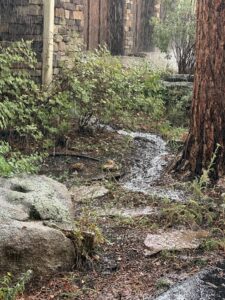
Even if your gutters are flowing properly, poor downspout placement can still damage your landscaping. A downspout that empties directly onto a flower bed creates the same concentrated erosion as an overflowing gutter. The water exits with enough force to displace mulch and carve channels through your plantings.
Downspout extensions solve this, but only if they’re properly positioned. The water needs to discharge at least four to six feet from the foundation, onto a splash block or into a dry well. Many homes have extensions that were added years ago and have since shifted, settled, or been removed during landscaping projects. The result is roof runoff emptying exactly where it shouldn’t.
In Colorado, where spring snowmelt combines with rainfall to create high-volume drainage events, proper downspout placement becomes even more critical. A gutter system that handles a typical summer storm might still overflow during a March warm spell when melting snow adds to the runoff load, especially if the downspouts are clogged, aren’t big enough to handle the volume or if foliage is slowing the exit of the water.
How Landscape Damage Affects Home Value and Curb Appeal
Curb appeal isn’t just about aesthetics — it’s about signaling to potential buyers that a home has been well maintained. Eroded landscape beds, damaged plantings, and visible drainage channels tell a different story. They suggest deferred maintenance and underlying problems.
Real estate appraisers specifically look at grading and drainage when assessing property value. Poor drainage that has caused visible landscape damage can raise questions about foundation integrity, basement moisture, and overall site management. Buyers notice it during showings, and it becomes a negotiating point.
For homeowners who plan to stay in their homes long-term, the concern isn’t resale value. Now your focus is the ongoing cost and effort of replanting, re-mulching, and repairing erosion damage every season. That’s time spent on maintenance that could have been prevented with a functioning gutter system.
We have some suggestions to spruce up your curb appeal.
What You Can Do to Protect Your Landscaping
Start with an honest assessment of your current gutter system. Walk your property during the next rain and watch where the water actually goes. Look for overflow points, look for erosion channels, and look at the condition of plantings near your roofline. Locate any signs of damage to your landscape or hardscape. If you see concentrated water streams, displaced mulch, or plants in saturated soil, you have a gutter drainage problem.
If your gutters are overflowing because they’re clogged, cleaning them will help temporarily. But be sure you’re back on that ladder at least twice a year, or the clog-overflow cycle will begin again. If the overflow is happening because your gutters are undersized for your roof area or can’t handle Colorado’s storm intensity, cleaning won’t solve the issue at all.
The long-term solution is a gutter system designed to handle high water volume without clogging. That means larger gutter capacity and a design that keeps debris out, not a system that requires you to clean it every fall and hope for the best.
Next Steps for Protecting Your Landscaping from Gutter Damage
- Inspect your property during the next rainfall to identify overflow points and erosion patterns
- Check the condition of foundation plantings — yellowing leaves and stunted growth indicate drainage problems
- Verify that downspout extensions are in place and directing water at least four feet from the foundation. Learn more about foundation damage here.
- Look for signs of hardscaping damage near gutter overflow areas — settled pavers, cracked walkways, or undermined patio edges
- Consider whether your current gutter system can actually handle Colorado’s storm patterns, or whether you’re just managing a recurring problem
The K-Guard Rocky Mountains Perspective
We’ve seen homes where gutter overflow has washed out thousands of dollars in landscaping over just a few seasons. The pattern is easy to recognize, clogged gutters, concentrated overflow, and erosion that gets worse each year. K-Guard’s system uses a patented hood design and oversized gutter channels to handle Colorado’s heavy spring runoff without clogging. Your roof water goes where it’s supposed to: through the downspouts and away from your plantings. The system is designed to eliminate the overflow problem permanently, not just manage it season to season.
K-Guard Rocky Mountain installs a permanent, maintenance-free gutter system built for Colorado homes. If you’re ready to stop replanting the same flower beds every spring or if you are looking for water collection solutions, schedule a free quote with our team.