Why Most “Premium” Gutter Guards Still Clog in Colorado
You’ve already cleaned your gutters twice this year and have heard every gutter guard company’s promises — “never clean your gutters again.” You’ve seen the ads from LeafFilter, Gutter Helmet, and K-Guard. Watched the demonstrations where pine needles slide off and water flows through. You’re not looking for the cheapest option, just to find one that actually works.
Most homeowners don’t realize until two or three years after they’ve made a gutter guard purchase, that the technology behind each system determines whether it can deliver on that promise. Colorado’s climate, where you’re dealing with cottonwood seeds in May, pine needles all fall, and freeze-thaw cycles from November through March, is where those differences matter most.
The Real Question: What Happens When Gutter Guards Fail?
The average foundation repair in Colorado runs between $4,000 and $10,000. Ice dam damage to roofing and interior walls can exceed $8,000. These aren’t scare tactics. They’re the actual costs homeowners face when water doesn’t drain properly. Especially during spring snowmelt or during a July thunderstorm that dumps an inch of rain in 20 minutes.
Standard gutters fail because they clog. But here’s what most companies won’t tell you up front: some gutter guard systems also clog. They just move the clog from inside the gutter to on top of the guard. You’re still dealing with debris. You’re still getting out the ladder. You’ve just spent $2,000-$5,000 to slightly delay the problem.
Compare How Each System Actually Works
LeafFilter uses micro-mesh technology — a fine stainless steel screen that sits on top of your existing gutters. The mesh has very small openings to keep debris from entering your gutters. Water flows through the mesh while debris theoretically stays on top until it’s blown off. The system requires removing any existing gutter guards you may have, then screwing the mesh through your drip edge and the tops of your existing gutters.
Gutter Helmet uses a reverse-curve design with a narrow opening. Water follows the curve of the helmet and enters through a slot, while leaves and larger debris are supposed to fall over the edge. The system requires accessing your roof edge to slip under the first row of shingles and on top of your existing gutters. The opening width is a critical variable — too wide and debris gets in, too narrow and heavy rain overshoots.
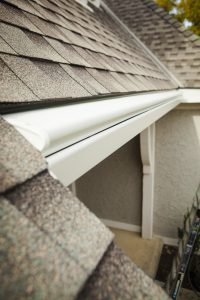
K-Guard uses surface tension with a completely different approach. Instead of filtering debris or relying on gravity alone, K-Guard is a complete gutter replacement system. The hood channels water in through a narrow front opening while the rounded nose design prevents debris from entering. There’s an added back channel that accommodates large volumes of water. There’s no mesh to clog, no narrow slot to overshoot, and no existing gutter to work around.
Performance in Pine Needle Environments
If you live anywhere near the foothills or have mature pines in your neighborhood, this is where the systems diverge dramatically. Pine needles are the worst-case scenario for gutter guards because they’re thin enough to slip through larger openings and they mat together when wet.
LeafFilter’s micro-mesh handles pine needles better than any other mesh-based system, but it doesn’t eliminate the problem. Pine needles lay flat on the mesh surface and, when wet, can form a barrier that slows water flow. During Colorado’s spring snowmelt, when you’re getting sustained water flow for hours at a time, that layer of needles become a dam. They need to be brushed off periodically, and sometimes require power washing to remove sap and lodged debris.
Gutter Helmet’s reverse-curve design works well with pine needles, most will fall off the system, though some will still get into your gutters. If needles begin to accumulate in your gutters, they can lead to a clogged gutter or downspout. The company recommends occasional inspections/maintenance in heavy pine environments which means you’re still doing maintenance.
K-Guard’s hood design prevents pine needles from entering because there’s no horizontal surface where they can accumulate and no mesh for them to cling to. The needles slide off the curved hood during wind or rain events. Any debris that does find it’s way in to the system, is washed out by the flushing action created by moving water through a large gutter system. In 15+ years of Colorado installations, the system has consistently outperformed mesh and other reverse-curve designs in foothill homes.
Heavy Snow and Ice Dam Prevention
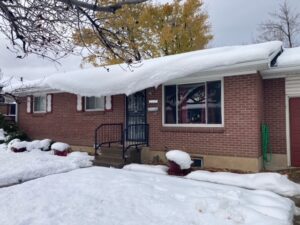
Colorado’s freeze-thaw cycles create a challenge most gutter guard companies don’t address in their marketing. When snow accumulates on your roof and starts melting during the day, that water needs somewhere to go. If your gutters are blocked by ice or debris, water backs up under your shingles where it refreezes at night creating ice dams.
LeafFilter’s mesh can hold water on its surface when temperatures drop, creating an ice layer that blocks flow until it thaws. It’s physics; any horizontal surface in freezing temperatures will accumulate ice if water is present. During extended cold snaps, some homeowners have reported reduced flow capacity until temperatures rise above freezing for several hours.
Gutter Helmet’s opening can freeze shut during prolonged cold periods, especially if water drips onto the slot from above. Ice can also build up on the nose of the helmet, creating a barrier that deflects water outward instead of into the gutter. The system works well in moderate climates but requires attention in areas with sustained below-freezing temperatures.
K-Guard’s larger gutter capacity (6-inch versus standard 5-inch) handles higher water volume from rapid snowmelt. The patented design pushes any ice formation forward, away from your roof line and allows heat cable to be added to the system for anyone that finds icicles to be an issue. During spring thaw cycles when you’re dealing with the heaviest water flow of the year, that capacity difference becomes critical.
Warranty Comparison: What’s Actually Covered
LeafFilter offers a lifetime transferable warranty that covers the product and installation. However, the warranty specifically states that cleaning or servicing the mesh is the homeowner’s responsibility. If debris accumulation causes overflow damage to your home, that’s not covered. The warranty protects against manufacturing defects and installation failures — not performance issues caused by debris buildup.
Gutter Helmet provides a lifetime warranty on the product but limits coverage for installer workmanship to the original installer’s guarantee, which varies. The warranty doesn’t typically cover damage caused by ice dams or overflow from debris accumulation. If the system underperforms in heavy pine needle areas, that’s considered an environmental factor, not a warranty issue.
K-Guard’s lifetime transferable warranty covers both product and installation, and it includes the entire gutter system — not just the guard component. Because K-Guard is a complete replacement rather than an add-on, the warranty addresses the full water management system, down to the downspouts. If the gutters ever clog or fail to perform, K-Guard addresses it. That’s a meaningful difference when you’re thinking about long-term home value and the next owner’s peace of mind.
Installation Method and Impact on Your Home
LeafFilter sits inside your existing gutters, which means you’re keeping gutters that may be 10, 20, or 30 years old. If those gutters are already showing signs of rust, separation, or improper pitch, the mesh doesn’t fix those underlying problems.
Gutter Helmet installation involves screwing brackets through your fascia board into the rafters, creating penetration points that must be properly sealed to prevent water intrusion. The back of the guard is installed under the first row of shingles, which can disturb the shingle seal and, if not done carefully, may create future leak points. This may also void your roofing warranty. The system is designed to support snow load, but the fascia attachment method means you’re depending on your fascia board’s condition. On older homes where fascia boards have some rot or deterioration, this can be a concern.
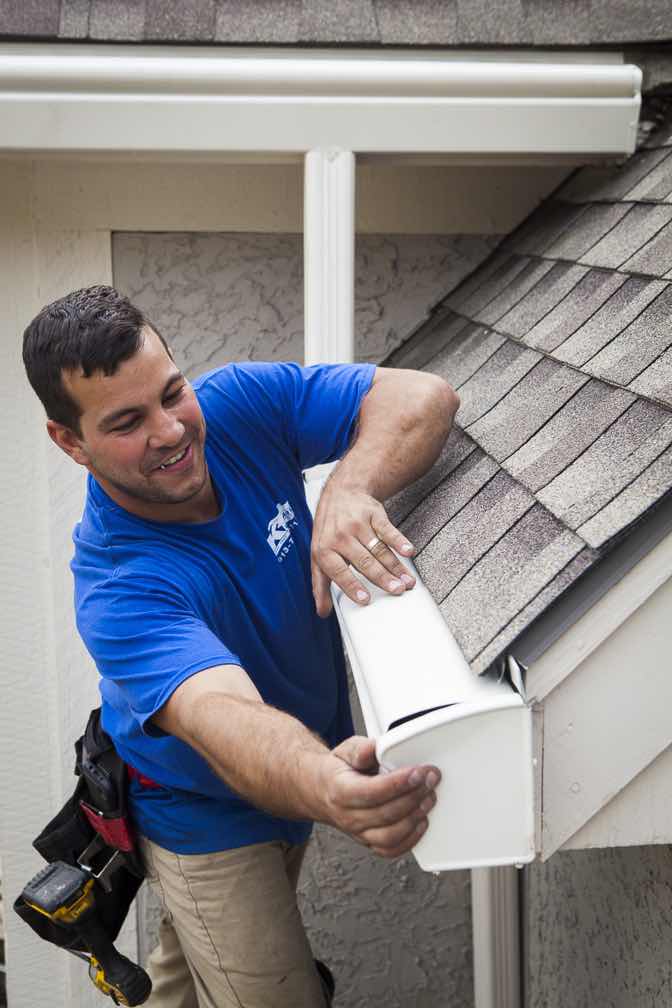
K-Guard installation removes your old gutters entirely then inspects your fascia for reliability and strength. Rotten fascia is replaced before installing the new system with hangers that attach directly to the fascia, every 24 inches. Because it’s a complete replacement, you’re starting with new materials throughout. No hidden rust. No accumulated sediment in old gutters. No concerns about whether the existing system was properly pitched. The installation typically takes one to two days for an average home, and because installers are replacing rather than retrofitting, they can correct any pitch or drainage issues from the original installation.
Price Range and Long-Term Value
LeafFilter typically runs $18-$45 per linear foot installed, depending on your home’s configuration and local market pricing. For a home with 150 feet of gutters, expect to invest $2,700-$6,750. That’s for the guard system only – you’re keeping your existing gutters. You’ll pay separately for gutter cleaning, replacement and/or repairs.
Gutter Helmet pricing is similar, typically $25-60 per linear foot. The same 150-foot home would cost $3,750-$9,000. Like LeafFilter, this is an add-on to your existing system. You’re betting that your current gutters have enough life left to justify the investment.
K-Guard’s pricing is similar and often lower than competitors. Linear foot pricing is difficult to determine due to the many factors involved because you’re replacing the entire gutter system, not just adding a guard. The good news is that it’s always free to have KGuard come to your home and give you an unwavering quote. The biggest difference is that you’re getting new gutters, new downspouts, and a complete warranty on the entire system. If your existing gutters are more than 15 years old or showing any signs of deterioration, K-Guard’s complete replacement approach eliminates the risk of paying twice — once for guards now and once for gutter replacement later.
The Maintenance Reality After Three Years
This is where marketing claims meet real-world homeowner experience. Talk to LeafFilter owners after three Colorado winters and you’ll hear about mesh cleaning particularly on roof sections with pine trees or cottonwoods overhead. It’s not the twice-yearly ladder climb you’d do with open gutters, but it’s not zero maintenance either. The mesh needs brushing every 12-18 months in typical conditions, more often in heavy debris environments.
Gutter Helmet owners in Colorado report similar experiences. The system dramatically reduces maintenance compared to open gutters, but they are not maintenance free. The debris that does get through the opening eventually causes clogging which requires gutter cleaning, Though much less frequently than before, that’s not the “never touch them again” promise from the advertising.
K-Guard owners report the closest experience to true zero maintenance. Because there’s no mesh to clean and no horizontal surface where debris accumulates, most homeowners don’t touch their gutters after installation. The curved hood design is self-cleaning in normal weather conditions. Annual inspections are recommended, but those inspections typically find nothing that needs attention. If they found a cause for concern, the company sent someone out to take care of it.
Next Steps for Choosing the Right Gutter Guard System
- Evaluate your existing gutters honestly. Are they more than 15 years old or showing rust, separation, or sagging? a complete replacement system makes more financial sense than adding guards to a failing foundation.
- Consider your specific debris environment. If you have mature pines or cottonwoods, ask each company specifically how their system performs in those conditions and whether periodic cleaning is required.
- Compare total system warranties, not just product warranties. Make sure you understand what happens if the system underperforms or if debris-related overflow causes damage to your home.
- Request references from customers who have had the system installed for at least three years. Ask them specifically about maintenance requirements and whether the system performs as promised during Colorado’s spring snowmelt and summer storms.
- Get written documentation of exactly what’s covered under warranty and what constitutes “normal maintenance” versus warranty service. These definitions vary significantly between companies and can affect your long-term costs.
The K-Guard Rocky Mountain Perspective
We install K-Guard because it’s the only system we’ve seen consistently deliver on the zero-maintenance promise in Colorado’s climate. We’ve talked to hundreds of homeowners who tried mesh systems or other reverse-curve guard competitors first, and the pattern is consistent — they reduce maintenance but don’t eliminate it. K-Guard’s complete replacement approach is the only system we will stand behind and confidently warranty for a life with no maintenance requirements. If you’re going to invest in a permanent solution, we believe it should actually be permanent.
K-Guard Rocky Mountain installs a maintenance-free gutter system built specifically for Colorado homes. If you want to compare our system directly against other options, schedule a free quote with our team. We’ll show you exactly how the system works and give you references from homeowners in your area who made the same decision you’re facing now.
—