Why Your Downspouts Freeze Solid Every February
You’ve probably stood in your driveway on a 45-degree afternoon in late February, watching water pour over the front of your gutters while nothing is exiting your downspouts. The sun is out. The temperature is above freezing. And yet somehow, you’ve got a solid column of ice running from your gutter outlet to the ground. Your downspouts are frozen shut!
This isn’t a freak occurrence. It’s how Colorado winters work, and it’s doing more damage to your home than you realize.
What Actually Happens Inside a Frozen Downspout
The freeze-thaw cycle in Colorado creates a specific problem that doesn’t exist in consistently cold climates. Here’s the sequence:
Afternoon temperatures hit 40-50 degrees. Snow melts on your roof. Water runs into your gutters and down your downspouts. Then the sun sets, temperatures drop to 20 degrees, and that water freezes inside the downspout, usually at the bottom where it meets the ground or at any elbow joint.
The next day, more melt happens. More water flows down. But now there’s an ice plug at the bottom. The water has nowhere to go, so it backs up into the gutter. If the gutter is already holding debris or a layer of ice, that backup can’t drain at all. It sits there, freezes overnight, and expands.
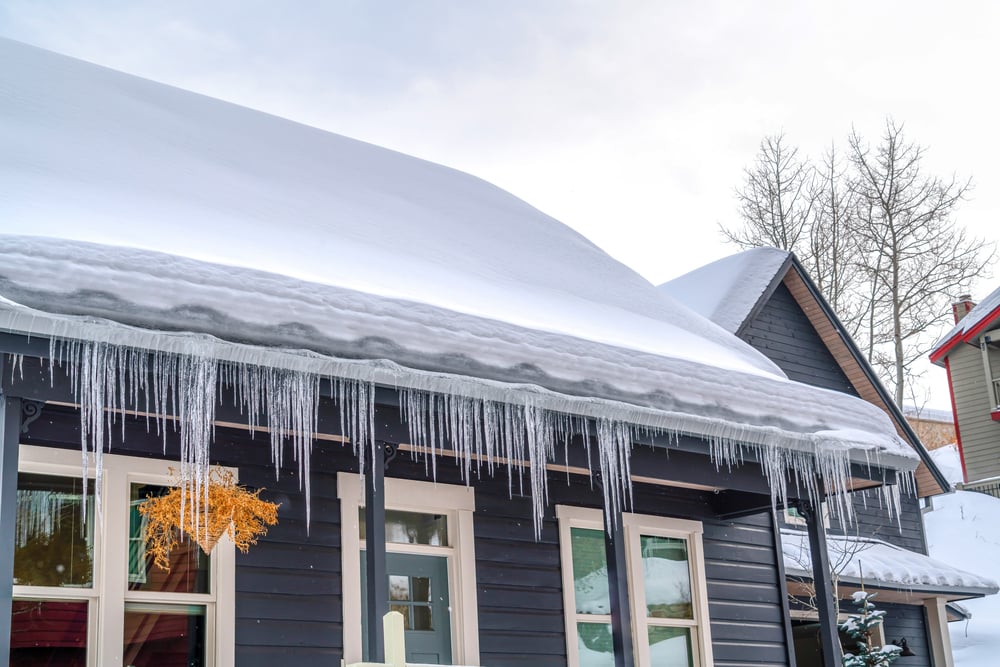
This is how ice dams start. Not from your roof, but from your gutters.
The Chain Reaction You Don’t See Until Spring
Once water backs up in the gutter and freezes, you’re looking at a cascade of damage that won’t show up until the weather warms.
Ice expansion damages the gutter itself. Water expands roughly 9% when it freezes. A gutter full of ice puts outward pressure on the seams, the fasteners, and the gutter material itself. Aluminum gutters can warp. Seams can separate. You won’t notice this in February, but by April you’ll see leaks at every joint.
The fascia board takes the worst of it. When gutters overflow, that water doesn’t just drip onto the ground. It runs behind the gutter and soaks the fascia board — the wooden board your gutter is attached to. Wood and ice are a bad combination. Fascia rot is one of the most common spring repairs we see, and it starts with frozen downspouts in winter.
Ice dams form at the roofline. If your gutter is frozen solid and more melt is coming off the roof, that water has to go somewhere. It backs up under the shingles at the roof edge. Once it’s under the shingles, it finds nail holes, seams, and eventually your attic. Interior water damage from ice dams typically costs $2,000-$8,000 to repair, depending on how long it took you to notice. Take a deep dive here on how to prevent ice dams.
Standard Downspouts Freeze More Often Than You’d Think
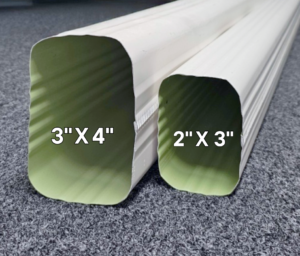
Most builder-installed gutters in Colorado use 2×3-inch downspouts. That’s a standard size, but it’s undersized for Colorado’s snow load and spring melt volume. A 2×3 downspout has a cross-sectional area of 6 square inches. A 3×4 downspout has 12 square inches — double the capacity.
That matters in two ways. First, a smaller downspout clogs more easily. A single cottonwood seed cluster, a clump of pine needles, or a bit of roof grit can create a partial blockage in a 2×3 downspout. Water slows down, and slow-moving water freezes faster than fast-moving water. Second, a smaller downspout holds less volume, so even a small ice plug at the bottom creates a backup quickly.
In practical terms, if you’ve got 2×3 downspouts and you’re dealing with frozen backups every winter, you’re not doing anything wrong. Your system is just undersized for the climate.
What the Evidence Says About Winter Gutter Damage
Foundation repair companies in the Denver metro track seasonal water intrusion patterns, and the data is consistent: late winter and early spring see the highest volume of foundation water damage calls. That’s not because the snow melts all at once in March. It’s because homeowners spend December through February with gutters that aren’t draining properly, and by the time the big melt hits, the water has nowhere to go except into the ground next to the foundation.
The average cost to repair foundation water damage in Colorado ranges from $4,000 to $10,000, depending on whether you’re dealing with crack sealing, drainage correction, or full structural work. Most of that damage is preventable with functional gutters and clear downspouts.
Fascia board replacement typically runs $12-$20 per linear foot, and if the soffit is damaged too, you’re looking at $400-$800 for a single section of your roofline. These aren’t catastrophic costs, but they’re repair costs — money spent fixing damage that didn’t need to happen.
What to Do If Your Downspout Is Frozen Right Now
If you’re reading this in the middle of winter and you’ve got a downspout that’s frozen solid, here’s what actually works:
Do not pour hot water on it. The temperature shock can crack vinyl or aluminum downspouts, and you’re just adding more water to a system that can’t drain. It’s a temporary fix at best, and you’ll likely make the problem worse.
Do not try to chip out the ice from the top. You’re not going to get through 8 feet of frozen downspout with a screwdriver, and you’re likely to damage the gutter outlet in the process.
If the blockage is at the bottom elbow, disconnect it if you can. Most downspout elbows at ground level are just crimped in place. If you can pull it off, you may be able to remove the ice plug manually. Be aware that once you do this, you’re committed to monitoring that downspout for the rest of the winter — it’s going to freeze again unless the weather stays consistently above freezing.
The better option: wait it out and plan ahead for next winter. Unless you’re seeing active leaking into your home, a frozen downspout in February is less risky than trying to fix it in freezing conditions. Once the weather warms, assess the damage, make any needed repairs, and address the root cause before next winter.
Why Oversized Downspouts Reduce Freeze Risk
This is where gutter system design actually matters. K-Guard’s system uses 3×4-inch downspouts as standard, not because they look better, but because they handle Colorado’s freeze-thaw cycles more effectively.
A larger downspout moves water faster. Faster-moving water is harder to freeze. It also means that if an ice plug does form at the bottom — which can still happen in extreme cold — the larger area gives you more capacity before the gutter backs up completely. You’re buying yourself time before water even begins to back up in the gutter.
The other advantage: K-Guard’s seamless, hooded design keeps debris out of the gutter. No pine needles means no partial clogs. No partial clogs means water flows freely until it hits the freeze point. It’s not that the system prevents ice (physics doesn’t work that way). The system reduces the conditions that make ice plugs likely. Here’s an explanation of why guards work in Colorado’s heavy snow.
Next Steps for Winter Gutter Backup
- Check your downspouts during the next melt event. Stand outside and watch where the water goes. If it’s overflowing the gutter instead of flowing through the downspout, you’ve got a blockage or a freeze issue.
- Look at your fascia boards in early spring. Dark staining, paint bubbling, or visible rot are signs that water has been getting behind the gutter all winter. Address this before next winter, or you’re looking at structural repairs.
- Measure your downspouts. If they’re 2×3 inches, you’re working with undersized capacity for Colorado’s climate. Upgrading to 3×4 downspouts — even on a standard gutter system — will reduce freeze backup risk significantly.
- Consider the full system, not just the parts. If you’re replacing fascia boards, repairing gutter seams, and dealing with frozen downspouts every year, you’re managing symptoms. At some point, replacing the entire gutter system is the more cost-effective choice.
- Schedule repairs in fall, not spring. Every contractor in Colorado is booked solid in April and May. If you know you need gutter work, get it done in September or October before the weather turns.
The K-Guard Rocky Mountains Perspective
We install gutters in Colorado, so we see the aftermath of frozen downspouts: fascia rot, separated seams, and homeowners who are tired of climbing ladders in February. K-Guard’s system uses oversized downspouts and an oversized, covered trough design specifically to handle the conditions that cause winter backups. It’s not magic, and it’s not marketing. It’s a larger system that moves more water and keeps debris out of the flow path. If you’re dealing with frozen downspouts every year, you’re dealing with a system that wasn’t built for this climate.
Ready to Stop Dealing With Frozen Downspouts?
K-Guard Rocky Mountain installs a permanent, maintenance-free gutter system built for Colorado homes. If you’re ready to stop climbing that ladder, schedule a free quote today.