
Gutter Installation in Colorado Springs: What Snow, Wind, and Cloudbursts Demand From the Job
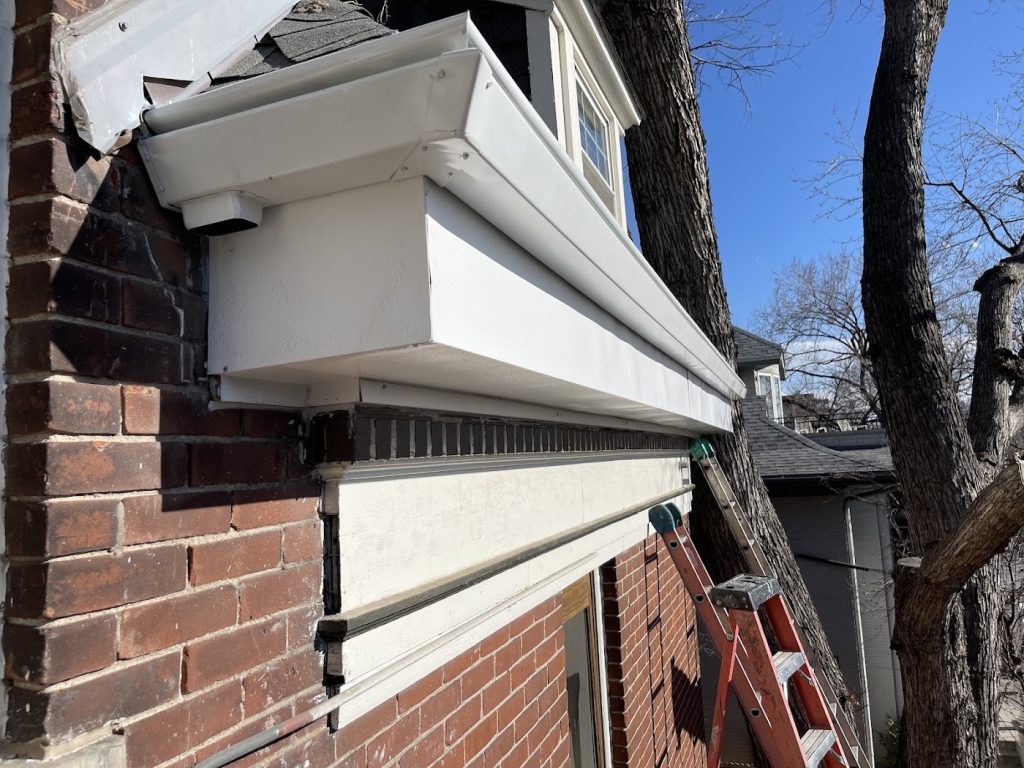
Gutter installation in Colorado Springs requires more from a system than the same job does in most of the rest of the country. A house here can take a 4-inch-per-hour cloudburst in July, a heavy wet snow in March that sits on the eave for a week, and a downslope wind event in between. The trough, the hangers and the fasteners all get tested hard, usually in the same year.
Most homeowners compare bids on just color and price, but trough size, attachment, and where the water goes once it leaves the downspout are the factors that determine if the work will hold up for the next decade or not.
Start with the water, not the gutter
Rain here arrives in short, violent bursts rather than long soakers. NOAA’s Atlas 14 point estimates for the city put the 5-minute peak intensity of a 2-year storm at 3.38 inches per hour, and a 25-year storm at 6.60 inches per hour (NOAA Precipitation Frequency Data Server). Those peaks only last a few minutes, which is just long enough to overrun a trough the wrong size.
Every 1,000 square feet of roof draining into one gutter line produces about 0.0104 gallons per minute for each inch per hour of rainfall.

Intensities: NOAA Atlas 14, partial duration series, point estimate for Colorado Springs (38.83, -104.82). Flow calculated at 0.0104 gpm per square foot per inch per hour.
A big two-story elevation can easily send 2,000 square feet of roof into a single run, making peak gutter flows above 100 gallons per minute. The 2021 International Plumbing Code sizes gutters and leaders off of that same combination of roof area and local rainfall rate (2021 IPC, Section 1106). A 5-inch trough with one downspout at the far end of a long run backs up over the front edge while the same house with a larger trough and a second outlet stays dry.
The K-Guard Leaf Free system is built around that math, with troughs and downspouts roughly 40% larger than typical guard systems, so the capacity question gets answered by the product rather than by adding outlets after the fact.
Your elevation determines the snow load your gutters live under
Where your house sits changes the number your roof is designed for. Builders in the Pikes Peak region work to a 43 psf ground snow load below 7,000 feet of grade plane, and 57 psf at or above it, which works out to 30 psf and 40 psf on a flat roof (Pikes Peak Regional Building Department design criteria, updated June 2026). If you live in Monument, Black Forest or Woodland Park, you’re in the higher band, and snow that slides off those roofs ends up sitting on the gutter line.
That matters for attachment. Spike-and-ferrule gutters transfer all of that load into a handful of nails driven through the fascia, which is why you see sagging front sections on older houses after a heavy spring storm. At K-Guard, we use patented all-weather polymer hangers spaced every 24

The board behind the gutter decides half the job
Old gutters hide what’s behind them. When a crew pulls a spiked system off a 1990s house, they often find fascia that has been wet for years, along with nail holes at every four feet. Hanging a new system on that wood buys you only about one season of a straight line.
A crew should look at that board before the estimate is written, call out rotted sections, and tell you who is replacing them. If nobody brings it up at all, that is worth a question. Our installation process covers what gets inspected before the trucks show up.
Pitch, seams and the parts you can see from the driveway
Gutters need slope to drain, usually a small, consistent fall toward each outlet. Too light of a slope and water stands in the trough through a freeze. Too steep and the line looks crooked from the street on a long ranch elevation. Seamless gutters formed on site avoid the joints that leak first on sectional runs, and heavy-duty non-corrosive aluminum holds its shape better than the thin stock sold in big-box kits.
Colors are more important here than people expect, because so many neighborhoods have covenants about trim color. With 37 color options, matching an existing fascia board or a covenant-approved palette is usually straightforward.
Where the water ends up
The best trough on the block still fails the house if the downspout dumps against the foundation. Soils along the Front Range swell when they get wet and shrink when they dry, and repeated cycles right at the footing are what crack basement walls. Downspout placement, extensions and grade all need to be considered before installation day, and a good crew will walk the perimeter with you to find the low spots.
If you’re comparing options across town, our Colorado Springs service page lays out what we install and where we work, and the gutter replacement guide for Colorado Springs covers how to tell repair from replacement.
What to ask before you book gutter installation in Colorado Springs
Ask what trough size and downspout size the bid includes, and what roof area drains into each run. Ask how the system attaches to the house and how far apart the supports sit. Ask who inspects and replaces rotted trim board, and what happens if rot shows up mid-job. Ask where every downspout will discharge. Written answers to those four questions tell you more about the finished job than any brochure.
Ready to price a system for your house? Request pricing or call K-Guard Rocky Mountains at (303) 476-4323, and we’ll size gutter installation in Colorado Springs to your actual roof, not to a standard length of 5-inch stock.
FAQ
What size gutters do I need for a house in Colorado Springs? Size follows roof area and local rainfall intensity, not house square footage. A 5-year storm peaks above 4 inches per hour, so a large roof plane draining to one line can push 90 gallons per minute. That is beyond what a small trough with a single outlet handles. Have the roof area measured per run before anyone quotes a size.
How are gutters attached so they hold up under snow? Look for closely spaced hangers fastened into sound wood rather than spikes driven every few feet. K-Guard’s system uses polymer hangers at 24-inch spacing, which distributes the weight of sliding snow across the whole run.
Does the Pikes Peak region have a snow load requirement that affects gutters? The building department sets a 43 psf ground snow load below 7,000 feet and 57 psf at or above it for structures. Gutters themselves aren’t engineered to that number, though the same snow ends up on the eave, which is why attachment and support spacing matter at higher elevations.
Can gutters be installed in winter here? Yes. Seamless aluminum is formed on site and can be hung in cold weather, so scheduling usually depends on access, wind and safe footing rather than the calendar.
Do gutter guards eliminate maintenance? A hooded system keeps leaves, pine needles and roof grit out of the trough, which is the maintenance most homeowners are trying to escape. The K-Guard Leaf Free system carries a lifetime clog-free warranty and a paint warranty that transfers with the home.
How long does an installation take? Most homes in the area are a one-day job once materials are on site. Fascia repair, complex rooflines and multi-story access add time, which is why the walkthrough happens before the install is scheduled.